
If you live in Slovakia or travel here often by car, it is good to know the local traffic rules and the fine system well. This is not just useful advice, but a necessary condition for your safety and peace of mind. Understanding how to act when stopped by the police or after receiving a fine will help you avoid unnecessary problems. After all, one careless turn, a forgotten vignette, or a phone call while driving – and instead of the Tatra mountain views, you might receive an unpleasant letter with a fine notification.
In this article, we will explain in detail what types of fines exist for drivers in Slovakia, how to pay them correctly, and what mistakes to avoid to ensure your travels leave only pleasant memories.

Source: Official list on mins.sk. The police consider the severity, consequences, circumstances, and the offender's identity. For a first offense, there is no forgiveness – a fine is always issued.

 If you had a prepaid ticket or discount but could not present it during the inspection, you can show a valid pass at the DPB ticket office within the specified period. In this case, the fine will be reduced.
Discount possibility:
DPB offers a discount on the fine if you purchase a long-term pass after the incident:
If you had a prepaid ticket or discount but could not present it during the inspection, you can show a valid pass at the DPB ticket office within the specified period. In this case, the fine will be reduced.
Discount possibility:
DPB offers a discount on the fine if you purchase a long-term pass after the incident:


Main types of fines for motorists
In Slovakia, traffic violations are classified as follows:- On-the-spot fines (pokuta na mieste) — this is when the police can issue a report and demand payment directly at the place of the stop. Such a fine must be paid officially, after the report is issued, which the driver has the right to receive in paper form. Payment without a receipt or any documents is not considered official and may be seen as a bribe. The main rule is never to give money "under the table," even if the amount seems small. This is a violation of the law, for which criminal liability is foreseen for both the driver and the police officer.
- Administrative or postal fines (konanie pred správnym orgánom) — these are cases where a report is not issued immediately on the spot, but is sent later by mail to your address. The letter will state the reason for the violation, the amount of the fine, the payment details, and the deadline for payment. You can pay at the post office or by bank transfer, if indicated in the notification. It is important not to delay: even a small delay in payment can lead to penalties, forced collection by the enforcement service, or even additional legal costs. Therefore, check your mailbox and respond to such notifications without delay.
Fines for not having a vignette (diaľničná známka)
If you use toll highways in Slovakia (roads of categories D and R), you must have a valid electronic vignette. Not having one is one of the most common violations among foreign drivers. The fine for driving without a vignette can be up to 500 euros, and if paid on the spot — from 50 to 200 euros. Control is carried out automatically through a system of cameras that read vehicle license plates. If there is no vignette, the driver will receive a fine notification. To avoid trouble, always check the validity period of your vignette before your trip. Read more about what a vignette is, who needs it, how much it costs, and how to buy it online or at a gas station in our article: Slovak Vignette: How to Drive on Toll Roads
Main fines for traffic violations in Slovakia
| Violation | Fine Amount | Driving Ban |
|---|---|---|
| Using a mobile phone while driving | 50–100 € (on-the-spot); up to 200 € (administrative) | – |
| Speeding in a built-up area (v obce): • up to 20 km/h • 21–50 km/h • >50 km/h | • up to 100 € (up to 50 € on-the-spot) • 150–600 € (30–400 € on-the-spot) • 500–1000 € (250–800 € on-the-spot) | – – 6 months–3 years |
| Speeding outside a built-up area (mimo obce): • up to 30 km/h • 31–60 km/h • >60 km/h | • up to 100 € (up to 50 € on-the-spot) • 150–600 € (30–400 € on-the-spot) • 500–1000 € (250–800 € on-the-spot) | – – 6 months–3 years |
| Alcohol while driving (0–0.3 ‰, or 0–1 ‰) | 150–800 € (up to 650 € on-the-spot); from 200–1000 € | Up to 3 years; up to 5 years |
| Alcohol >1 ‰ | Criminal offense (trestný čin) | Up to 5 years+ |
| Drugs while driving | 200–1000 € (up to 650 € on-the-spot) | Up to 5 years |
| Refusal to test for alcohol/drugs | 300–1300 € | 1–5 years |
| Lack of documents, technical defects, vehicle non-compliance (e.g., exceeding weight, dimensions) | 30–150 €; 150–800 € | Up to 3 years |
| Parking in a prohibited area | 30–150 €; up to 300 € (závažný spôsob) | – |
| Entry of heavy vehicles (>12 t) onto prohibited roads | 1500 € (up to 1000 € on-the-spot) | – |
| Other violations (according to the law) | 60–300 € (up to 150 € on-the-spot); up to 100 € (up to 50 € on-the-spot) | Up to 2 years |
Fines for traveling without a ticket on public transport (MHD) in Bratislava
If you are caught on public transport without a valid ticket, the inspector can issue a fine. The standard amount is 99 euros if you pay it on the spot or within 10 working days. If payment is made later, the amount increases.How to pay the fine:
- on the spot — in cash or by bank card to the inspector (be sure to get a receipt);
- in person — at the ticket office of Dopravný podnik Bratislava (DPB) at the address Olejkárska 1, Bratislava;
- by bank transfer — to account IBAN: SK80 1111 0000 0011 0136 4027, SWIFT: UNCRSKBX, variable symbol (VS): hlásenka number (fine notification number);
- by postal order (poštová poukážka) — using the details provided in the notification.
If you had a prepaid ticket or discount but could not present it during the inspection, you can show a valid pass at the DPB ticket office within the specified period. In this case, the fine will be reduced.
Discount possibility:
DPB offers a discount on the fine if you purchase a long-term pass after the incident:
- 80% discount when buying a 365-day pass,
- 50% discount when buying a 90-day pass (for zones 100/101, once every 2 years, the ticket must be purchased within 10 days and confirmed at the ticket office).
How to Pay Fines in Slovakia
You can pay a fine in Slovakia on the spot or by bank transfer. In any case, it is important to have proof of payment and not to give money "under the table" — only through official channels.Payment on the Spot
If the police or another authorized body allows payment directly during the check, ask for a protocol or receipt. This is the only legal proof that the fine has been paid. Do not hand over cash without an official document.Payment by Bank Transfer
The most common way is to pay the fine using the details provided in the order (rozkaz o uložení pokuty) or on the portal of the Ministry of Interior of the Slovak Republic.
Detailed instructions can be found on the official website: minv.sk
Consequences of Non-Payment
If the fine is not paid, the state may initiate forced collection. In addition to extra costs, the police have the right to remove the registration plates or the vehicle registration document during the next check — until the fine is fully paid. International collection within the EU is also possible, so the debt does not "disappear" even abroad.Stopped by Police: Step-by-Step Advice
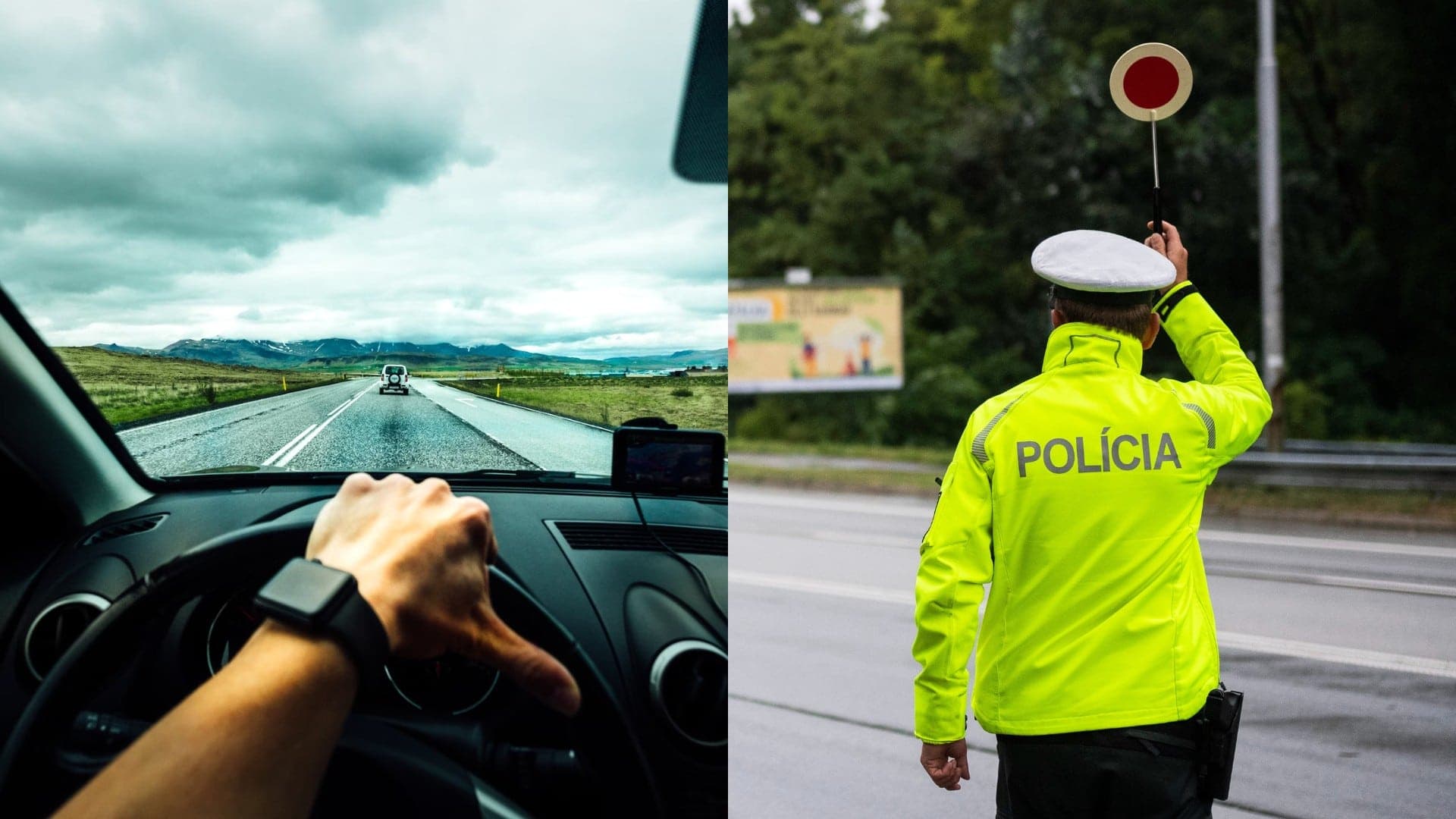
If you are stopped by the police in Slovakia, it is important to remain calm and act according to the law to avoid misunderstandings and unnecessary fines. Follow these rules:- Stopping and Safety: stop carefully, turn on your hazard lights, and make sure the car is in a safe place.
- Documents Ready: have your passport or ID (karta pobytu - residence card), driver's license, vehicle registration document, and insurance policy with you — this is the mandatory minimum for inspection.
- Behavior: keep your hands on the steering wheel, do not make sudden movements, and answer the police officer's questions calmly and clearly.
- Paying the Fine on the Spot: if the inspector asks you to pay the fine immediately, be sure to ask for a protocol or receipt. Payment without documents is illegal and can have serious consequences.
- What Not to Do: do not sign documents you do not understand, do not give money "under the table," do not argue aggressively, and do not try to avoid the stop — this will only make the situation worse.