
Finances in Slovakia for foreigners
Banks, individual taxes, transfers, and benefits — everything to manage your money confidently in Slovakia. Verified by KOMPAS editorial team, according to current rules 2026.
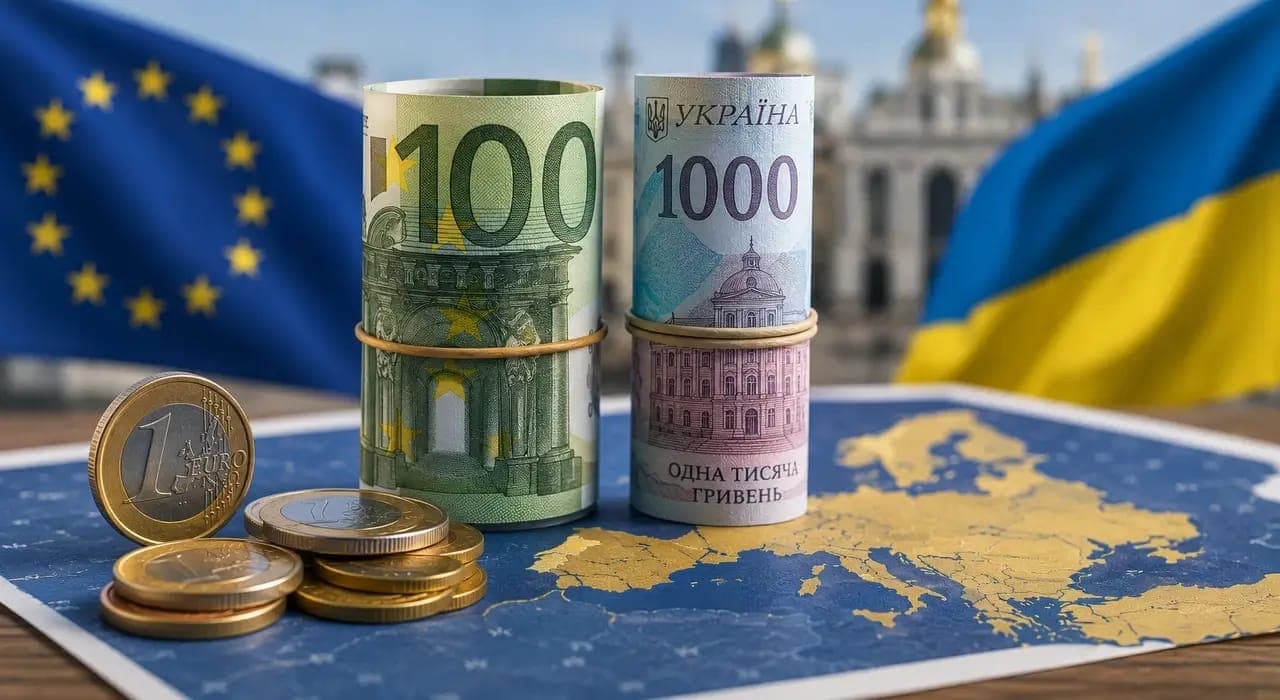
Money in Slovakia primarily means a bank account, salary “in hand” after deductions, taxes, and child benefits. Ukrainians with temporary protection have the right to open an account, and if it is difficult to get a regular account, a basic payment account (základný platobný účet) is guaranteed by law. An employed person usually does not need to file a tax return themselves: the employer handles the annual reconciliation for them.
This page contains practical guides on banks, taxes, reconciliation, and benefits, a glossary of financial terms, and links to primary sources — the National Bank of Slovakia nbs.sk and the tax office financnasprava.sk. Rates and thresholds are reviewed annually, so check the amounts with the primary source.
Articles about Finances in Slovakia


Useful services
Reference guides and tools for this topic.
Finance Dictionary
Key financial terms in simple words — with translation and a short explanation
Finance News
Taxes, rates, banks, and payments — short and to the point
Rare 2 euro coins can be worth up to 4000 euros — how to spot them
Published: Ranking of the lowest paid professions in Slovakia
ECB launched a survey to choose a new design for euro banknotes
What are the most common reasons for blocking bank accounts in Slovakia?
Briefly about the main points
How can a Ukrainian open a bank account?
People with temporary protection (dočasná ochrana) can open an account in a Slovak bank. In practice, most banks ask for a foreign passport, proof of temporary protection, and often a personal identification number (rodné číslo); some additionally require a residential address or proof of income.
If it is difficult to open a regular account, you have the right to a “základný platobný účet” — a basic payment account. This is a legally guaranteed service for those legally residing in the EU: it costs at most a few euros per month (free for vulnerable groups) and covers a card, transfers, and cash withdrawals.
Before choosing a bank, compare the monthly fee, transfer fees, and online banking conditions. The rules for basic accounts are supervised by the National Bank of Slovakia (Národná banka Slovenska) — see details on nbs.sk.
Does an employed person need to file a tax return?
Most often, no. If you worked under an employment contract for one employer all year and had no other taxable income, your employer can file a report for you. To do this, you must request “ročné zúčtovanie dane” — annual tax reconciliation — in writing by February 15.
You need to file a tax return (daňové priznanie) yourself if you had income from a sole trader licence, multiple employers, rent, property sales, or income from abroad, or if you did not manage to ask your employer for reconciliation. The standard deadline for filing and payment is March 31 for the previous year; it can be postponed by notification.
Annual reconciliation is often beneficial: if more tax was withheld during the year than is due, the overpayment is refunded. Forms, deadlines, and calculators are available on financnasprava.sk.
What tax bonuses and reliefs are available?
The most well-known relief is the daňový bonus na dieťa, a tax bonus for a child, which directly reduces your tax. In 2026, the maximum will be €100 per month for a child up to 15 years old and €50 for a child from 15 to 18 years old; the right disappears after 18 years.
The bonus amount is limited by a percentage of your tax base (from 29% for one child to 64% for six or more) and decreases with high income — approximately from a monthly base of €2,286 in 2026. An important condition: taxable income from sources in Slovakia must constitute at least 90% of all your income.
In addition to the child bonus, the tax base is reduced by the non-taxable part for the taxpayer. Since the amounts and conditions are reviewed annually, check the exact figures and your specific case on financnasprava.sk or with an accountant.
How to transfer money between Ukraine and Slovakia?
Within Slovakia and the EU, transfers are made using the IBAN account number in SEPA format — quickly and inexpensively. For transfers between Ukraine and Slovakia, international bank transfers (SWIFT) or licensed money transfer services are usually used; compare not only the commission but also the exchange rate, as the main cost is hidden in the rate.
If you are carrying cash across the EU border (and Ukraine is an external border), amounts of €10,000 or more must be declared in writing at customs. This applies to cash and equivalent instruments; there are fines for non-declaration.
For large transfers, the bank may ask you to confirm the origin of funds — this is a standard anti-money laundering procedure. Rules for declaring cash are on financnasprava.sk; check the conditions for a specific transfer with your bank.
What to do with Ukrainian income? Double taxation?
The key concept is tax residency (daňová rezidencia). If the center of your vital interests is in Slovakia (your family is here, you are here permanently), you are likely a Slovak tax resident and declare worldwide income, including Ukrainian income. If your ties are mainly with Ukraine — vice versa.
To avoid the same income being taxed twice, there is an agreement between Ukraine and Slovakia on the avoidance of double taxation. It determines which country taxes which income and allows for the credit of tax already paid. The mechanism depends on the type of income — salary, business, rent, or dividends.
This is one of the most complex topics where a mistake is costly, so general explanations do not replace consultation. Check your specific case on financnasprava.sk or with a Slovak tax advisor who knows both systems.
Money and Taxes in Slovakia for Foreigners 2026
A concise map of the topic: bank account, tax return, reconciliation, benefits. Detailed answers are in the frequently asked questions above; here is the main information with links to official sources.
Bank account
People with temporary protection can open an account; banks usually ask for a passport, proof of protection, and often a personal identification number (rodné číslo). If it is difficult to open a regular account, you have the right to a basic payment account (základný platobný účet) — at most a few euros per month. Compare fees and commissions; rules are supervised by nbs.sk.
Tax return and annual reconciliation
If you are an employee with one employer and no other income, you do not need to file a tax return — ask your employer for the annual tax settlement (ročné zúčtovanie dane) by February 15. You need to file a tax return (daňové priznanie) yourself if you have income from a sole-trader licence (živnosť), multiple employers, rent, property sales, or from abroad. The standard deadline is March 31. Forms are available on financnasprava.sk.
Tax bonus and residency
Tax bonus (Daňový bonus) is a benefit for children that directly reduces the tax of a working parent (amounts and conditions are reviewed annually). If you have ties to both Slovakia and Ukraine, tax residency (daňová rezidencia) is important: it determines which country taxes your worldwide income — if needed, consult the double taxation treaty or an accountant.
Related tools and sections
- Calculate currency exchange rates and popular amounts in hryvnias — Currency Converter.
- Your business and its taxes — go to the Business section with calculators.
- Gross/net salary and deductions — go to the Work section.
- What are the average salaries on the job market — Average Salaries 2026.
- Financial terms dictionary — /slovnyk.
Official sources
- financnasprava.sk — tax office: tax returns, rates, recalculations.
- nbs.sk — National Bank: basic account, rules for banks.
Questions about money or taxes? Ask the community
Changes in rates, tax return deadlines, banks, and payments — short and timely updates on our Telegram channel
Subscribe