
Salaries in Slovakia:
by occupation and region
ŠÚ SR · Q1 2026 · year on year · data verified 2026-07-24
Pay by occupation
Find your occupation — we show the official statistics and an independent employee survey separately, because they measure different populations.
The median shows the typical wage (half of workers earn less); the average is an arithmetic mean that high earners pull upward. The employee survey gives a wider range because people report their own income. That is not an error — the two methods simply measure different things.
All 33 occupations · median
tap to see the rangePay by region
Only Bratislava region is above the national average. Prešov region is growing fastest (+10.8% nominal, +6.8% real), meaning the gap in the east is closing. Please note: the lowest region is Prešov, and Košice (€1,476) is already higher than Žilina, Banská Bystrica, and Nitra.
ŠÚ SR · Q1 2026 · nominal year-on-year growth
Pay by industry
Bold values were independently reprinted by media; the rest are from the ŠÚ SR (Statistical Office of the Slovak Republic) table appendix, which has no independent reprints. We show finance in the summary cards with the threshold 'over €3,000' because that's how the release named it; the exact €3,259 is only in the table. What the full list shows: 18 out of 19 sectors saw nominal growth, but real wages fell in six – mining (−3.7%), information and communication (−3.4%), electricity (−2.0%), administrative services (−1.3%), real estate (−1.0%), and public administration (−0.7%). This means the common saying 'IT has the highest salary' is twice incorrect for Slovakia: finance is the leader, and real wages in IT decreased. Education grew fastest: +14.5% nominal and +10.4% real.
| Industry | Gross / month | Nom. y/y | Real y/y |
|---|---|---|---|
| Finance and insurance | 3 259 € | +4,6% | +0,9% |
| Information and communication | 2 664 € | +0,2% | −3,4% |
| Electricity, gas and steam | 2 653 € | +1,6% | −2,0% |
| Public administration and defense | 2 065 € | +3,0% | −0,7% |
| Human health and social work activities | 1 923 € | +7,4% | +3,6% |
| Professional, scientific and technical activities | 1 851 € | +6,0% | +2,2% |
| Industry totalsum of sections | 1 721 € | +6,0% | +2,2% |
| Manufacturing | 1 692 € | +6,3% | +2,5% |
| Mining and quarrying | 1 670 € | −0,1% | −3,7% |
| Educationconfirmed | 1 582 € | +14,5% | +10,4% |
| Water supply | 1 581 € | +4,6% | +0,9% |
| Transportation and storage | 1 552 € | +7,6% | +3,8% |
| Real estate activities | 1 536 € | +2,7% | −1,0% |
| Tradeconfirmed | 1 518 € | +4,5% | +0,8% |
| Arts, entertainment and recreation | 1 379 € | +7,8% | +4,0% |
| Agriculture, forestry and fishing | 1 311 € | +9,3% | +5,4% |
| Administrative and support service activities | 1 283 € | +2,4% | −1,3% |
| Construction | 1 147 € | +6,8% | +3,0% |
| Other service activities | 1 029 € | +6,7% | +2,9% |
| Accommodation and food service activitiesconfirmed | 963 € | +6,1% | +2,3% |
The “confirmed” tag marks figures that independent media reprinted; the rest come from the statistical office's data tables and have no independent reprint.
Estimates for larger cities
This figure shows the order of magnitude, not an official wage for your city: we take the district-to-region ratio from the 2024 survey and apply it to the region's pay for the current quarter.
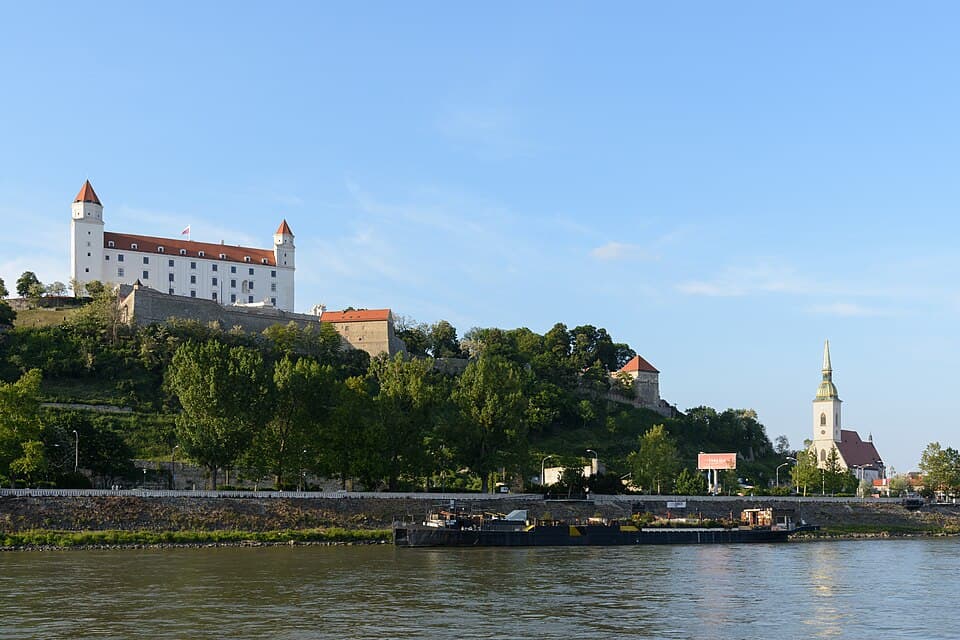
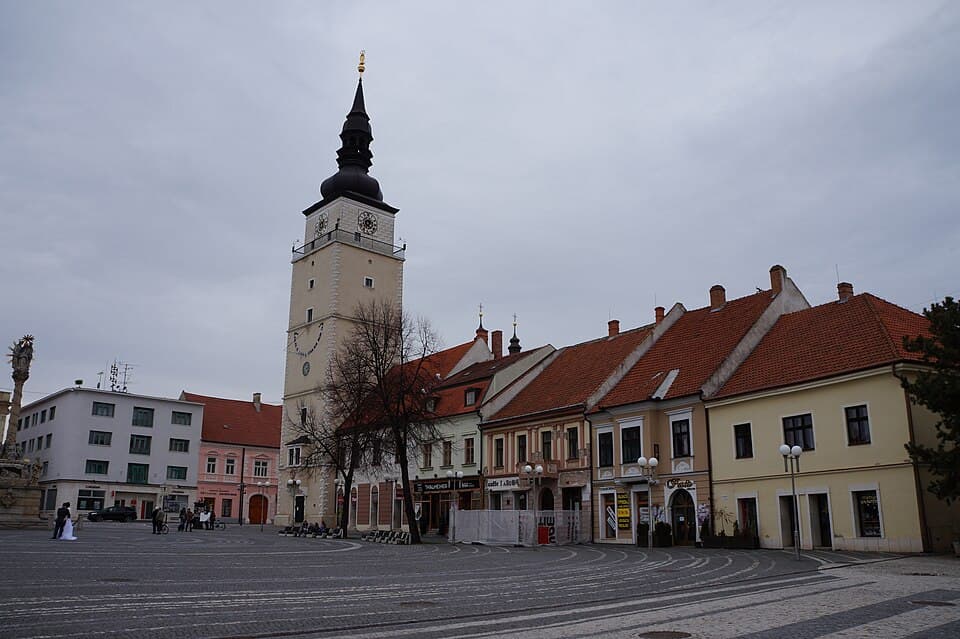
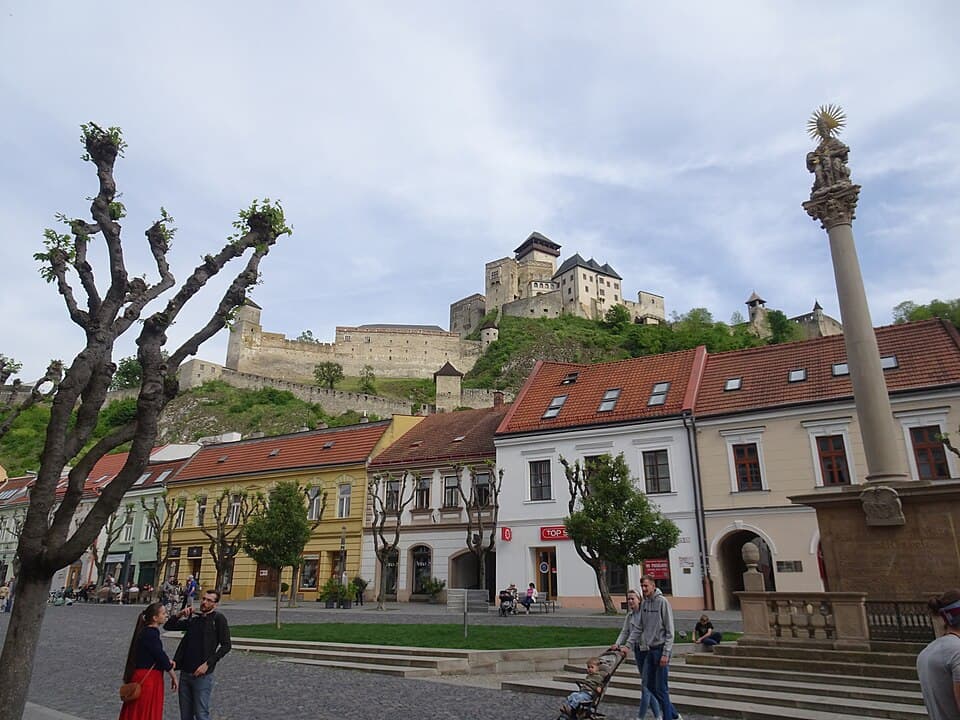
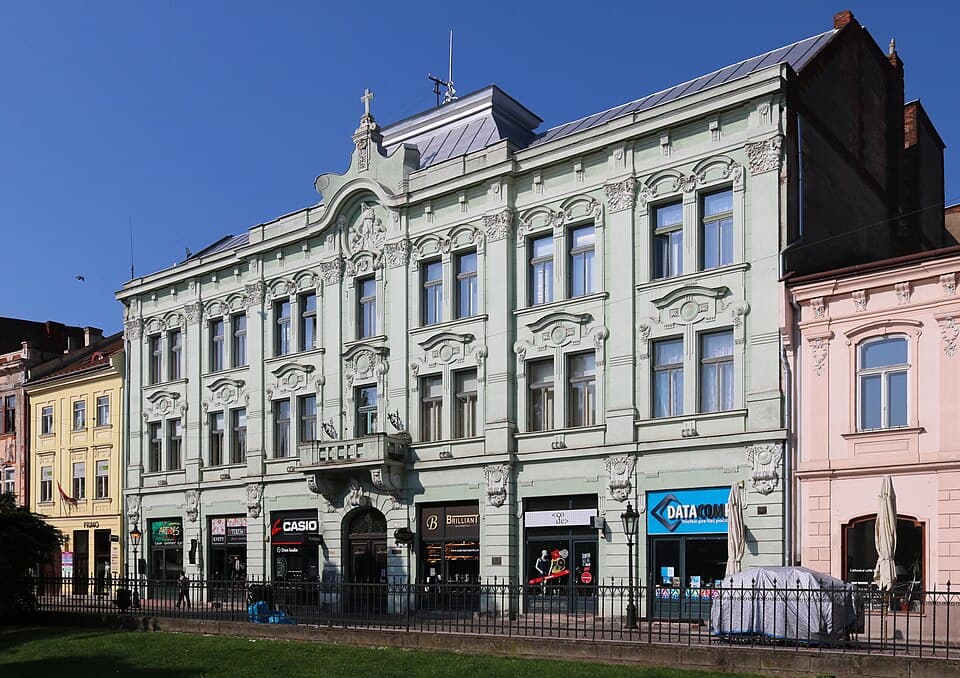
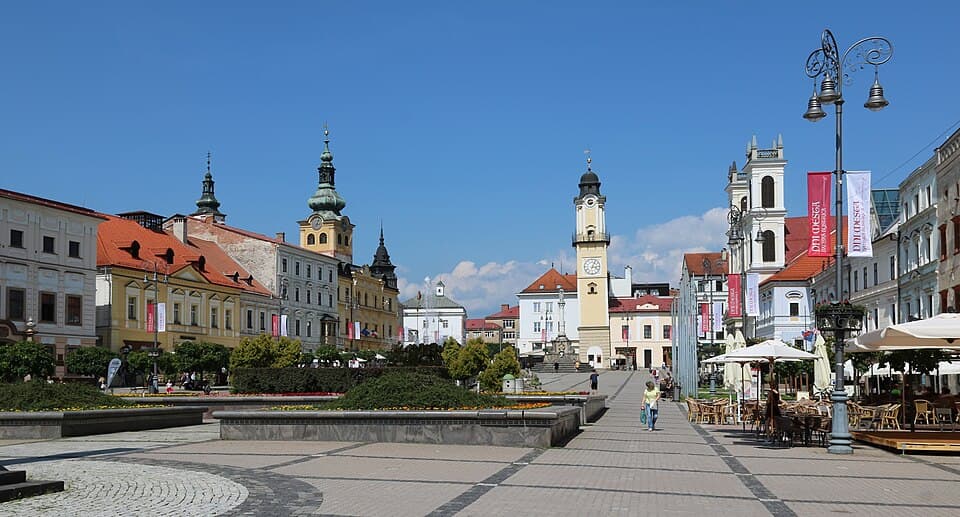
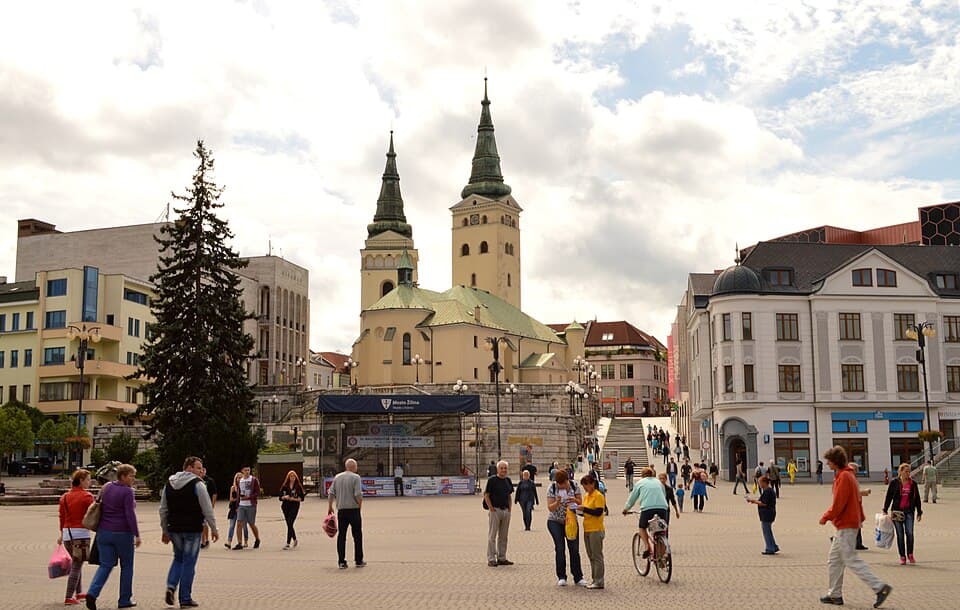
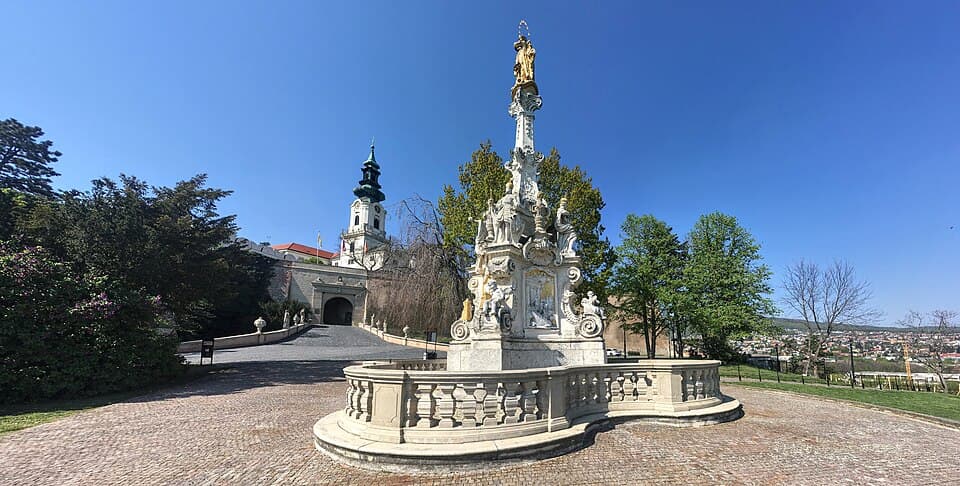
🔴 This is a KOMPAS calculation, not an official number from the ŠÚ SR (Statistical Office of the Slovak Republic). The statistics office publishes average salaries by district, but in a different series – the ISCP survey for 2024, which shows 14.8% higher quarterly figures nationwide. Therefore, we do not directly use the district amount, but rather the ratio of 'district to its region' within the same series (right column) and apply it to the regional salary for Q1 2026. What this means in practice: the figure shows the order of magnitude, not the official salary in your city. For six out of eight cities, the district is wider than the city itself and includes surrounding villages, so the estimate is likely underestimated. Bratislava and Košice consist of several districts – we averaged them ourselves, as the statistics office does not publish city-wide totals. Medians at the district level do not exist at all.
How pay has changed since 2022
The main thing this series shows: in 2022 and 2023 pay fell in real terms — inflation ate the nominal growth. The turnaround only came in 2024.
We compare Q1 with Q1 and use the entire series from one ŠÚ SR publication: the statistics office updates old values retroactively, so a graph compiled from press releases from different years would be comparing incomparable things. The main thing visible from this series: in 2022 and 2023, salaries actually fell – inflation ate up nominal growth. A turnaround only happened in 2024.
Gross and net: what actually reaches your account
“Gross” (brutto) is the amount before contributions and tax — that is the figure written into contracts and job ads. “Net” (netto) is what lands in your account. More on gross and net.
The exact net amount depends on the tax declaration, the non-taxable part, children, and benefits, so a universal rule of 'minus 20-25%' does not exist.
Minimum wage in Slovakia 2026
This is the lowest legal pay for full-time work (40 hours per week), valid from January 1 to December 31, 2026. For more complex work, higher minimum rates based on job complexity (mzdové nároky) apply – these are used if pay is not set by a collective agreement.
What the minimum wage isMore detail by breakdown
Each breakdown has its own page with the full data, the method explained and answers to the questions specific to it.
Common job searches
This is a shortcut list of occupations that takes you straight to the jobs. For their pay, see the “Pay by occupation” block above, which states the method and the period.
What people earn in Slovakia 2026
In Q1 2026, the average gross salary in Slovakia was €1,611 gross per month (ŠÚ SR). Compared to Q1 2025, it increased by 6.1% nominally and by 2.3% adjusted for inflation. This is statistics for the entire economy, not the guaranteed income of a specific employee: the average is skewed by high-paying industries and the Bratislava region, so most vacancies offer less.
The minimum wage from January 1 to December 31, 2026, is €915 gross per month or €5.259 per hour for a standard 40-hour week. 'Gross' is the amount before contributions and taxes; the net amount is less, and there is no single percentage — the calculation depends on the tax declaration, children, and benefits. Each indicator below is signed with its source and period; professions are shown separately by two methods because official statistics and employee surveys count different populations.
Frequently asked questions about pay
What is the average salary in Slovakia in 2026 and why is it higher than what I see in job vacancies?+
In Q1 2026, the average gross salary was €1,611 gross per month (ŠÚ SR).
However, 'average' is the arithmetic mean for the entire economy, and it is pulled up by high salaries of managers, finance, and IT. Half of the employees earn less than the average — that's why actual job vacancies often look 'poorer' than the statistics. This is not a data error, but a property of the indicator itself.
The statistical office does not publish a comparable national median for this quarter, so we do not provide it — it's better to have no figure than a foreign metric presented as a median. To assess the real offer, look at the median for your profession in the block above and specific job vacancies.
What is the minimum wage in Slovakia in 2026?+
€915 gross per month or €5.259 per hour for a standard 40-hour week — from January 1 to December 31, 2026.
This is the absolute legal minimum for simple work. For work of higher complexity, higher minimum rates (mzdové nároky) apply — they are applied if the payment is not set by a collective agreement. This means that if your position requires qualifications, the employer generally has no right to pay exactly the minimum wage.
If you have part-time employment, the minimum is recalculated proportionally to the hours worked. More details — minimum wage.
How much is left "net" in hand?+
There is no universal rule of "minus 20–25%" – and this is the main thing to know, because this figure is repeated everywhere.
From gross, an employee usually pays 9.4% for social and 5% for medical contributions. After that, tax is calculated, but already taking into account the tax-free part – and it depends on your income, and the lower the salary, the larger the portion it "eats up".
Next, children, tax reliefs, other income, and rounding in salary calculation change the result. Therefore, two people with the same gross can receive different net amounts. If you need an exact sum, ask your employer to show you the calculation or consult an accountant.
How much does a driver, nurse, or IT specialist earn?+
In the "Salary by Profession" block above, we intentionally show two columns, not one number: official statistics from ISCP and an independent employee survey from Platy.sk.
They count different sets: official – employer reports by profession codes, survey – what people indicate themselves. Therefore, the survey range is always wider, and this is not a mistake. For example, for a truck driver, the official median is €1,348, while the survey gives a range from €1,063 to €2,811 depending on the type of transport and experience.
Averaging these columns or deriving "one correct figure" from them would be incorrect – you would get a number that does not exist in any source. Look at both and focus on the median: it is closer to a typical offer than the average.
In which region are salaries the highest?+
The highest average is in the Bratislava region: €1,984 gross (1st quarter 2026), and it is the only region above the national average. The lowest is in the Prešov region: €1,306.
However, the common notion of "the east is poor" is no longer accurate. The Prešov region is growing the fastest in the country (+10.8% nominal, +6.8% real), and Košice (1,476 €) has surpassed Žilina, Banská Bystrica, and Nitra. The gap between west and east remains, but it is narrowing.
Do not compare salaries without considering expenses: housing rent in Bratislava is significantly more expensive, and the higher income there is partially "eaten up" by the cost of living. Calculate the real gain as salary minus rent and transport.
All eight regions are taken from the ŠÚ SR (Statistical Office of the Slovak Republic) tabular appendix for the 1st quarter of 2026. Only three regions are named in the text of the release itself – independent publications do not reprint the rest, so we do not present individual figures as independent statements.
Are salaries growing in Slovakia?+
In the 1st quarter of 2026 compared to the 1st quarter of 2025, salaries grew by 6.1% nominally and 2.3% really.
The difference between these figures is inflation. Nominal growth shows how much more money you were credited; real growth shows how much more you can buy with it. It is the second figure that answers the question "has life become easier," and it is almost always more modest.
Looking at several years, the picture is even less rosy than in the news: in 2022, real salaries fell by 1.4%, and in 2023 – by 4.9%, despite nominal growth of almost 10%. That is, "salaries are growing" – this is true only from 2024 onwards. The full series for the 1st quarters of 2022–2026 is shown on this page in a separate block.
Data sources
Every figure is labelled with its source and period. The headline numbers — the average, the minimum wage, the top industries — are confirmed by independent publications. The regional tables, the yearly series and the median are published only by the statistical office: we cite them with a link to the source and do not present individual values as standalone claims. Data verified on 2026-07-24.
This is information, not a promise of income: official statistics describe the market as a whole, while any particular offer depends on the employer, the region, your experience and the terms of the contract.