
Čerstvý chlieb on the price tag means fresh bread. Not stale. The word sounds the same as in Ukrainian but has a different meaning, and there are dozens of such words in Slovak.
This page is a reference, not a course. It's for things you'll come back to: 46 letters with Ukrainian transcription, sounds that don't have a pair in Ukrainian, false friends, and phrases for specific situations — doctor's office, checkout, post office, police, renting. Open it on your phone while in line.
How many letters are in the Slovak alphabet and how to read them
The Slovak alphabet has 46 letters — one of the longest in Europe. The length comes from diacritics: the caron — called mäkčeň in Slovak (č, š, ž), the length mark, dĺžeň (á, í, ú), softness within the character itself (ď, ť, ň, ľ), the two dots, dve bodky, over ä, and the "vocal," vokáň, over ô. It's worth remembering these names: this is how diacritics are called at school, in dictionaries, and in keyboard settings. Three digraphs are considered separate letters — dz, dž, and ch. This is not a formality: in the dictionary, look for the word chlieb (bread) after all words starting with h; it's not among words starting with c. You won't need to remember the stress — in Slovak, it's always on the first syllable. Vowel length is not stress: á is held longer, but the first syllable is still stressed.
| Letter | Name | In Ukrainian | Example | Pronounced |
|---|---|---|---|---|
| A a | á | a | auto — auto | [ауто] |
| Á á | dlhé á | long a | káva — coffee | [каава] |
| Ä ä | široké e | e | mäso — meat | [месо] |
| B b | bé | b | banka — bank | [банка] |
| C c | cé | ts | cena — price | [цена] |
| Č č | čé | ch | čaj — tea | [чай] |
| D d | dé | d | dom — house | [дом] |
| Ď ď | mäkké dé | d' | ďakujem — thank you | [дякуєм] |
| Dz dz | dzé | dz, one sound | medzi — between | [медзі] |
| Dž dž | mäkké dzé | j, one sound | džem — jam | [джем] |
| E e | é | e | teraz — now | [тераз] |
| É é | dlhé é | long e | téma — theme | [теема] |
| F f | ef | f | film — film | [фільм] |
| G g | gé | g, always hard | garáž — garage | [ґарааш] |
| H h | há | h, like Ukrainian | hora — mountain | [гора] |
| Ch ch | chá | kh | chlieb — bread | [хлєп] |
| I i | í | i | izba — room | [ізба] |
| Í í | dlhé í | long i | víno — wine | [вііно] |
| J j | jé | y | jeden — one | [єден] |
| K k | ká | k | kľúč — key | [клюуч] |
| L l | el | l | lekár — doctor | [лекаар] |
| Ĺ ĺ | dlhé el | long syllabic l | vĺča — wolf cub | [вллча] |
| Ľ ľ | eľ | ly | ľudia — people | [людя] |
| M m | em | m | more — sea | [море] |
| N n | en | n | noc — night | [ноц] |
| Ň ň | eň | n' | kôň — horse | [куонь] |
| O o | ó | o | okno — window | [окно] |
| Ó ó | dlhé ó | long o | citrón — lemon | [цітроон] |
| Ô ô | vokáň | uo, one syllable | stôl — table | [стуол] |
| P p | pé | p | pes — dog | [пес] |
| Q q | kvé | kv | only in loanwords | — |
| R r | er | r | ruka — hand | [рука] |
| Ŕ ŕ | dlhé er | long syllabic r | vŕba — willow | [вррба] |
| S s | es | s | syr — cheese | [сір] |
| Š š | eš | sh | škola — school | [школа] |
| T t | té | t | tma — darkness | [тма] |
| Ť ť | mäkké té | t' | ťava — camel | [тява] |
| U u | ú | u | ulica — street | [уліца] |
| Ú ú | dlhé ú | long u | úrad — office | [уурат] |
| V v | vé | v | voda — water | [вода] |
| W w | dvojité vé | v | only in loanwords | — |
| X x | iks | ks | only in loanwords | — |
| Y y | ypsilon | i, same as i | syr — cheese | [сір] |
| Ý ý | dlhý ypsilon | long i | nový — new | [новії] |
| Z z | zet | z | zima — winter | [зіма] |
| Ž ž | žet | zh | žena — woman | [жена] |
Two lines from this table are worth rereading. H and ch are different sounds, and a Slovak speaker will notice the substitution instantly. Y and ý are pronounced the same as i and í: syr sounds like "sir," even though it looks familiar.
Which sounds in Slovak have no pair in Ukrainian
There are actually few problem areas, and they all fit into one list. A Ukrainian speaker stumbles where the language is deceptively similar: the letter is familiar, but the sound is different. H is pronounced like our "h" [ɦ], and ch is like our "kh" [x], so hora (mountain) and chodník (sidewalk) have nothing in common, although they look similar. Long á, é, í, ó, ú, ý are the same vowels, just held about twice as long, and length distinguishes words: sud is a barrel, and súd is a court. Ä in live pronunciation almost always sounds like a regular "e": mäso is "meso."
| Symbol | What's wrong with it | How it actually sounds |
|---|---|---|
| h vs ch | eyes see one letter, ears hear two | hora [hora], chlieb [khlieb] |
| á é í ó ú ý | length, not stress | víno [viiino], úrad [uurad] |
| ľ | soft "l'" where a Ukrainian speaker would say a hard "l" | ľudia [ludia] |
| ď ť ň | d', t', n' even at the end of a word | ťava [t'ava], kôň [kuon'] |
| dz, dž | one sound, though two letters | medzi [medzi], džem [džem] |
| ô | diphthong "uo" in one syllable | stôl [stuol] |
| ŕ, ĺ | syllable without a vowel at all | vŕba [vrrba], trh [trkh] |
| voiced consonants at the end | become voiceless | preukaz [preukas], doklad [doklat] |
Remember kde (where) separately: it's pronounced "gde" [gde], because k before a voiced d becomes voiced itself. Such shifts are systematic in Slovak, and they are what make the spoken language different from the written one.
Why Slovak never has two long syllables in a row
This is the rhythmic law — a rule that doesn't exist in Ukrainian and explains half of the "strange" endings. It's formulated simply: a long syllable cannot immediately follow a long one, and the second one is shortened. That's why žena (woman) in the dative plural becomes ženám, and tráva (grass) becomes trávam, already without the second length. That's why the adjective "white" is biely. That's why láskam, not láskám. You don't need to be able to explain this. You need to know one thing: if you add length and the word suddenly looks awkward, the rhythmic law has most likely kicked in, and you should remove the length.
Which words mean something completely different from what you hear
This is the most expensive table on the page. Slavic similarity works against you here: the word sounds familiar, your brain substitutes the Ukrainian meaning, and you say something completely different. The meanings below are verified against the academic dictionary of JÚĽŠ SAV — the same one used by Slovak editorial offices.
| Slovak | Actually means | Sounds like |
|---|---|---|
| čerstvý [cherstvy] | fresh, newly made | stale |
| zápach [zápakh] | stench, unpleasant smell | smell in general |
| vôňa [vuonya] | pleasant smell, aroma | stench (vôňa sounds like Ukrainian "вонь") |
| ovocie [ovotsye] | fruit; vegetables are zelenina | vegetables |
| stolica [stolytsa] | bench; historical administrative unit (county); in medicine — feces | capital city (capital city — hlavné mesto) |
| stolička [stolichka] | chair; also a molar tooth | something like a small table |
| pozor [pozor] | attention, caution | disgrace |
| sprostý [sprosty] | dumb, stupid | simple (simple — jednoduchý) |
| úžasný [uzhasny] | wonderful, amazing | terrible (terrible — hrozný) |
| chytrý [khytry] | clever, smart; archaic — fast | cunning |
| nápad [naapad] | idea, concept | attack |
| zľava [zlyava] | discount | from the left |
| dôchodok [duokhodok] | pension | income (income — príjem) |
| žiadosť [zhiadosht] | application, written request | greed |
| pobyt [pobit] | stay, residence | everyday life |
| výpoveď [viiypoved'] | termination, contract cancellation; also testimony (výpoveď svedka) | answer (answer — odpoveď) |
| pohotovosť [pohotovost'] | emergency medical service | readiness |
| objednať sa [obyednat' sa] | to make an appointment | to unite |
| známka [znaamka] | postage stamp; school grade | sign |
| práve [praave] | just now, right now | right, law |
The most dangerous word on the list is sprostý. A Ukrainian speaker uses it to mean "simple," while a Slovak speaker hears "stupid." The second most damaging is výpoveď: if an employer says they are giving you a výpoveď, it is by no means an answer to your letter.
What to say at the doctor's office and pharmacy
To make an appointment with a doctor in Slovak is objednať sa, and this is the word you'll look for on clinic websites. The insurance card is called preukaz poistenca; the largest insurance company has a separate page for Ukrainians because the terminology here is specific. How the system works in general is in our guide to the Slovak healthcare system. Here is only what you need to say out loud.
| Phrase | Translation | Pronunciation |
|---|---|---|
| Chcem sa objednať k lekárovi. | I want to make an appointment with a doctor. | [hcem sa ob-yed-nat' k le-ka-ro-vi] |
| Mám termín o desiatej. | I have an appointment at ten. | [maam ter-miin o de-si-a-tey] |
| Bolí ma hlava. | My head hurts. | [bo-lii ma hla-va] |
| Bolí ma brucho, bolí ma zub. | My stomach hurts, my tooth hurts. | [bo-lii ma bru-ho, bo-lii ma zub] |
| Mám teplotu. | I have a fever. | [maam te-plo-tu] |
| Toto je môj preukaz poistenca. | This is my insurance card. | [to-to ye muy pre-u-kaz po-is-ten-tsa] |
| Potrebujem recept. | I need a prescription. | [po-tre-bu-yem re-tsept] |
| Kde je pohotovosť? | Where is the emergency room? | [gde ye po-ho-to-vost'] |
How to communicate in a shop and at the market
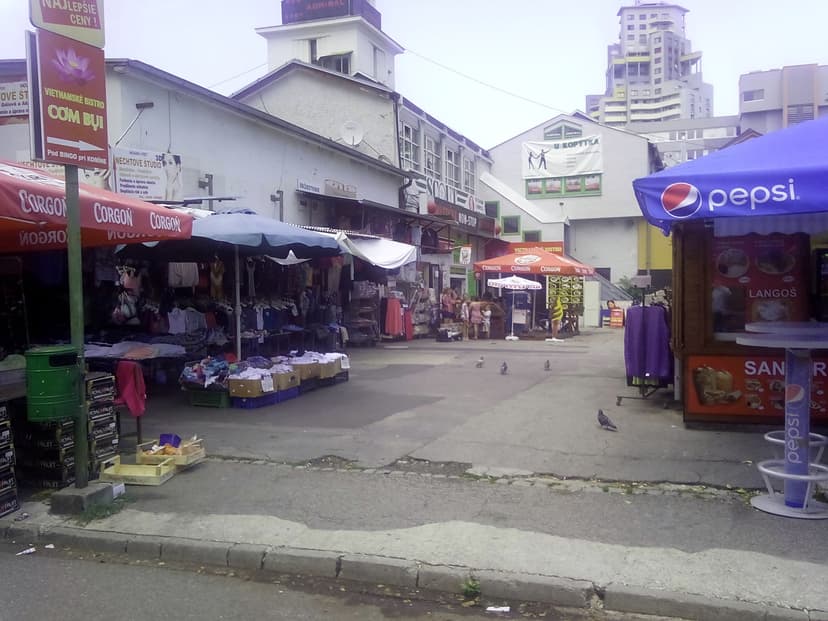
The checkout is a place where false friends can cost you money. Zľava on a price tag means a discount. Ovocie are fruits, zelenina are vegetables, and confusion will lead you to the wrong aisle. Čerstvý means fresh, so the sign čerstvé mäso promises the opposite of what a Ukrainian ear might hear. One more small thing to know in advance: the cashier almost always asks the same question, and it's enough to recognize the question by ear.
| Phrase | Translation | Pronunciation |
|---|---|---|
| Koľko to stojí? | How much does it cost? | [kol-ko to sto-yi] |
| Je to čerstvé? | Is it fresh? | [ye to cher-stve] |
| Kde nájdem ovocie a zeleninu? | Where can I find fruits and vegetables? | [gde nai-dem o-vo-tsye a ze-le-ni-nu] |
| Máte na to zľavu? | Do you have a discount on this? | [maa-te na to zla-vu] |
| Platím kartou. | I'm paying by card. | [pla-tiim kar-tou] |
| Ešte niečo? | Anything else? — the cashier asks this | [esh-te nye-cho] |
| Prosím si chlieb a mlieko. | I'd like some bread and milk, please. | [pro-siim si hlyeb a mlye-ko] |
| To je všetko, ďakujem. | That's all, thank you. | [to ye fshet-ko, dya-ku-yem] |
What they want from you at the post office
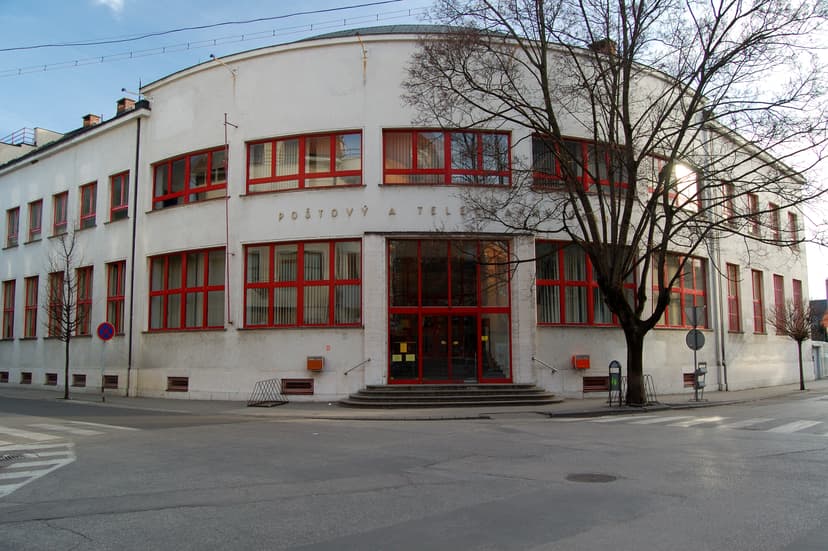
The post office is the most formal place on this list, but the vocabulary here is short and limited. A registered letter is officially called a doporučený list — this is how it is listed in the tariffs of Slovenská pošta. Any shipment is a zásielka, a paper form filled out by hand at the counter is a podací lístok, and the counter itself is a priehradka. Stamps are známky, which is the same word used for grades in school.
| Phrase | Translation | Pronunciation |
|---|---|---|
| Chcem podať doporučený list. | I want to send a registered letter. | [hcem po-dat' do-po-ru-chen-yy list] |
| Koľko stojí poštovné? | How much does postage cost? | [kol-ko sto-yi posh-tov-ne] |
| Prišiel som si po balík. | I came to pick up a package. | [pri-shyel som si po ba-liik] |
| Prišla mi zásielka. | A shipment arrived for me. | [pshys-hla mi zaa-syel-ka] |
| Potrebujem známky. | I need stamps. | [po-tre-bu-yem znaam-ki] |
| Kde mám vyplniť podací lístok? | Where do I fill out the sending form? | [gde maam vy-plu-nit' po-da-tsi liis-tok] |
What words you will hear at the alien police office
Here the vocabulary matches the forms, so learning it is doubly beneficial. Temporary residence is prechodný pobyt, permanent is trvalý pobyt; both terms are on the foreigner's stay page of the Ministry of Interior. An application is a žiadosť, documents are doklady, and making an appointment is again objednať sa: the official formula on the website is Objednajte sa na OCP elektronicky. If documents need to be officially translated, we have a separate guide on where to find a sworn translator.
| Phrase | Translation | Pronunciation |
|---|---|---|
| Prišiel som podať žiadosť o prechodný pobyt. | I came to submit an application for temporary residence. | [pri-shyel som po-dat' zha-do-st' o pre-hod-niy po-bit] |
| Objednal som sa elektronicky. | I made an appointment online. | [ob-yed-nal som sa e-lek-tro-nits-ki] |
| Toto sú moje doklady. | These are my documents. | [to-to suu mo-ye do-kla-di] |
| Musím nahlásiť zmenu adresy. | I must report a change of address. | [mu-siim na-hlaa-sit' zme-nu a-dre-si] |
| Nerozumiem, môžete hovoriť pomaly? | I don't understand, can you speak slowly? | [ne-ro-zu-myem, muo-zhe-te ho-vo-rit' po-ma-ly] |
| Kde mám podpísať? | Where do I sign? | [gde maam pod-pii-sat'] |
What words in a rental agreement determine money
Three words in the contract determine how much you will pay and how much you will get back. Nájomné is the rent. Peňažná zábezpeka is the security deposit, and the law on short-term apartment rental directly limits it to three times the monthly nájomné including service charges (§ 5, section 2). Most importantly, the parties to the contract sound almost the same: prenajímateľ is the one who rents out, and nájomca is the one who rents. Confuse them in conversation, and you've just agreed to someone else's obligations. The notice period for termination, výpovedná lehota, according to the same law, cannot be shorter than one month (§ 7, section 3).
| Phrase | Translation | Pronunciation |
|---|---|---|
| Aké je mesačné nájomné? | What is the monthly rent? | [a-ke ye me-sa-chne naa-yom-ne] |
| Aká je peňažná zábezpeka? | What is the security deposit? | [a-kaa ye pe-nyaazh-naa zaa-be-spe-ka] |
| Kedy mi vrátite zábezpeku? | When will you return the security deposit? | [ke-di mi vraa-ti-te zaa-be-spe-ku] |
| Aká je výpovedná lehota? | What is the notice period? | [a-kaa ye vee-po-ved-naa le-ho-ta] |
| Chcem vidieť nájomnú zmluvu. | I want to see the rental agreement. | [hcem vi-dyet' naa-yom-nuu zm-lu-vu] |
| Kto je prenajímateľ? | Who is the landlord? | [kto ye pre-naa-yim-a-tel'] |
| Čo zahŕňa nájomné? | What does the rent include? | [cho za-hrr-nya naa-yom-ne] |
What to do next
You can master the alphabet in one evening: it's logical, and the principle of "read as it's written" is almost true here. False friends take longer because they are caught in real situations. A method that works: keep this page open for the first month and add your own words that you stumble upon. When the alphabet stops being an obstacle, move on to the system — we have a guide on how a Ukrainian can quickly learn Slovak, and a separate selection of Slovak blogs for language learning, where the language is alive, not from a textbook.