
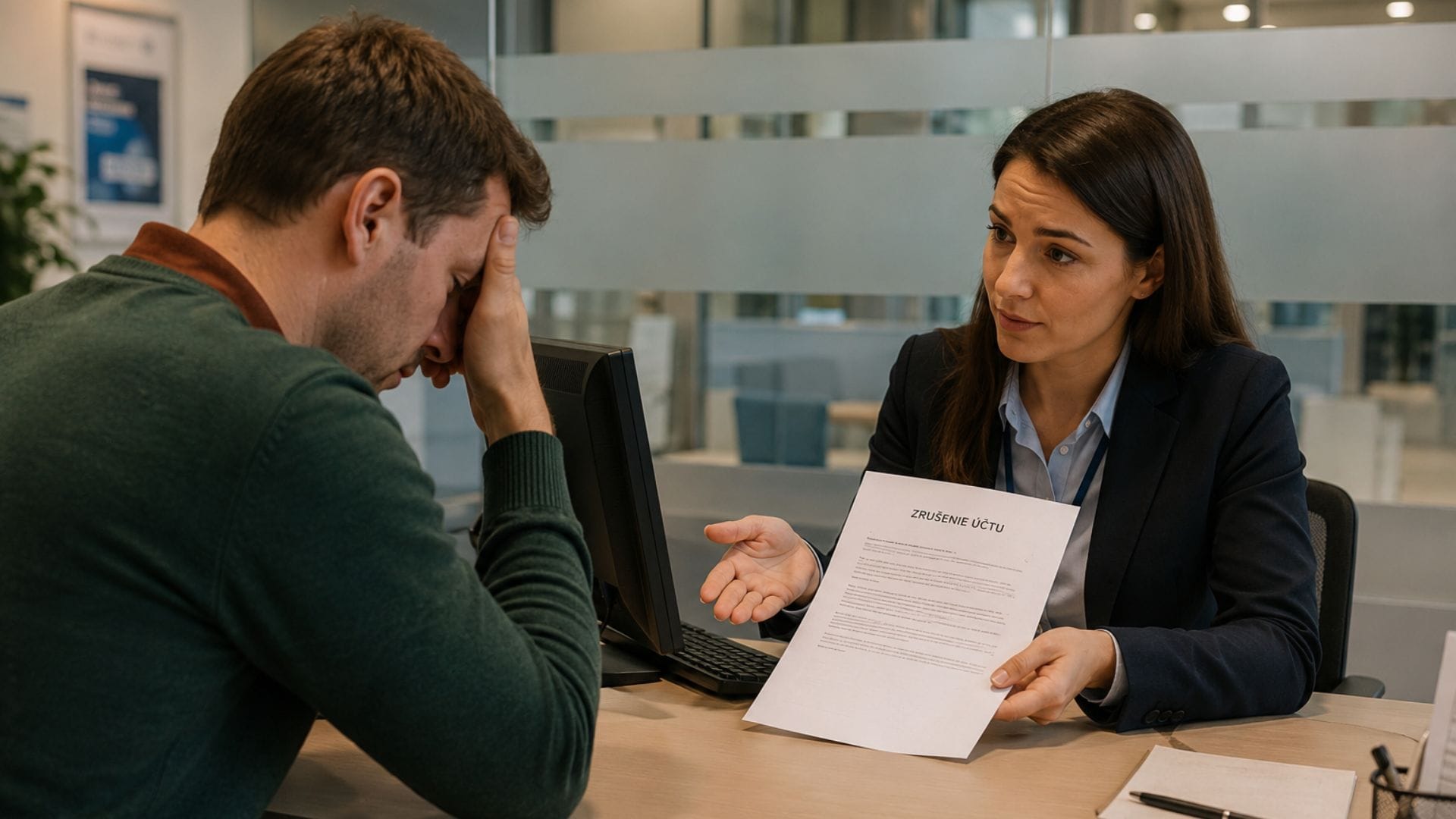
This situation can cause panic, but it's important to understand that the bank doesn't always act on its own initiative. Often, the financial institution is just following the law, a court order, or trying to protect your own money from fraudsters. Let's look at the most common scenarios so you know how to act.
Debts and Court Orders: When an Enforcement Officer Gets Involved
The most common reason for freezing an account is debt collection, or exekúcia (enforcement). If you have unpaid debts (taxes, alimony, fines, utility bills, overdue loans), a creditor can turn to a court enforcement officer. The enforcement officer, in turn, sends the bank an order to block the funds in your account.
In this case, the bank is only an intermediary and cannot cancel the block. It must follow the order. You need to solve the problem directly with the court enforcement officer, whose contact details you can get at the bank branch.
Suspicious Transactions: The Bank is Protecting Your Money
The second most common reason is security measures. Bank systems constantly analyze money movement in accounts to detect unusual activity that might indicate fraud.
What might seem suspicious:
- A sudden payment in a country you have never visited.
- Several unusual transactions in a short period.
- A large money transfer abroad that is not typical for you.
- Attempts to log into internet banking from an unusual IP address.
In such cases, the bank may temporarily block your card or account to prevent theft. Usually, a bank employee will call you immediately to confirm the transactions. If everything is okay, access will be restored.
Anti-Money Laundering Law (AML): Where Did the Money Come From?
Banks in Slovakia, like in the entire EU, strictly follow the law on combating the legalization of proceeds from criminal activity (zákon č. 297/2008 Z. z.). This means they must know the origin of their clients' money.
If a large sum of money (even less than the official limit of €15,000) is deposited into your account, the bank may temporarily block the funds and ask you to provide documents proving their legal origin. This is especially relevant for Ukrainians transferring their savings. Be prepared to provide a sales contract for property, inheritance documents, a tax return, or other proof.
Outdated Information: Why It's Important to Update Your Details
Another common reason is outdated personal information. According to the "Know Your Customer" (KYC) principle, banks must have up-to-date information about you. If your residence permit (povolenie na pobyt) or passport has expired, and you haven't provided the bank with a new document, your account may be restricted.
Usually, the bank sends reminders several times via email or through internet banking. If you ignore these messages, access to your account will eventually be blocked until you visit a branch with current documents.
Other Common Reasons for Blocking
There are a few more situations when access to an account may be limited:
- At the request of law enforcement agencies. An account can be blocked based on a court, prosecutor's, or police order if the owner is involved in a criminal investigation.
- Death of the account holder. After officially being notified of a client's death, the bank freezes the account until the inheritance process is completed.
- Cryptocurrency transactions. Buying cryptocurrencies itself is not a reason for blocking. However, if the bank suspects you have fallen victim to a fraudulent investment scheme, it may block the transaction to protect you.
What to Do If Your Account is Blocked?
- Don't panic. The first step should be to call your bank's information line. The operator will explain the reason for the block or advise you on how to proceed.
- Find out the reason. If it's a suspicion of fraud or outdated information, the problem can be resolved by phone or during a visit to the branch.
- Contact the enforcement officer. If the reason is an exekúcia, the bank will provide you with the court enforcement officer's contact details. All negotiations to lift the block must be conducted with them.
- Prepare documents. If the block is related to an AML check, gather all documents that prove the legality of your funds.