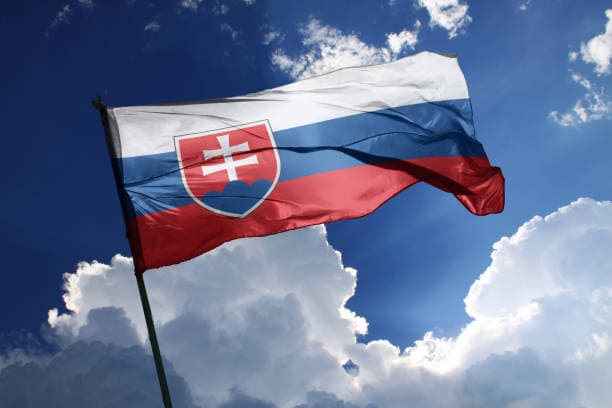

Slovakia officially says goodbye to mandatory bachelor's theses. A new law on higher education takes effect on September 1, 2026, and for thousands of students, including Ukrainians in universities in Trnava, Bratislava, and Žilina, this will change their final year of study.
What exactly is changing
The law does not cancel final theses completely—it gives universities the right to decide for each study program whether a bachelor's thesis will be mandatory or if it can be replaced by an alternative. This means everything will depend on the specific university and the specific major.
For master's programs, the rules are stricter: students must choose one of two options—a thesis or záverečná stáž (final internship). You cannot opt out of both.
The Ministry of Education of Slovakia cites two reasons for the reform. The first is the spread of AI, which makes it increasingly difficult to verify the authorship of written work. The second is the demand from the labor market: employers want to see practical skills, not the ability to compile others' sources, according to the ministry's website.
What can replace a thesis
An internship is not the only option. Depending on the program, universities can offer:
a practical project;
a portfolio of work;
for creative majors—an artistic work or its public presentation;
for medical fields—for example, a collection of patient case histories.
The choice of "thesis or internship" is intended for nurses, physiotherapists, radiologists, tourism specialists, and applied computer science professionals, among others, writes RTVS.
Internship is not an "easy way" to a diploma
The ministry immediately warns: a formal practice "for the sake of it" will not count. The internship must be a full equivalent of a thesis, and the law specifies requirements for this:
The university clearly defines the internship conditions for each program.
A supervisor is assigned to the student.
The results of the internship—for example, in the form of a portfolio—must be defended before a state commission, just like a regular thesis.
Comenius University in Bratislava, the country's largest university, supports flexibility but emphasizes that everything will depend on the specifics of the faculties, and internships will require no less quality control than written work.
Who is implementing it first
The pioneer will be the University of St. Cyril and Methodius in Trnava (UCM)—changes will take effect here starting next academic year, primarily for students in medical fields. The university has had about a year and a half to prepare internal rules, reports Startitup. Comenius University and the University of Žilina (UNIZA) will implement the reform gradually, and the Slovak University of Technology (STU) plans to start only in 2027.
What this means for Ukrainian students
Many Ukrainians study at universities in Trnava, Bratislava, and Žilina, so the change directly affects them. Two practical things are worth considering right now.
The first is language. An internship in a Slovak company or institution will require confident Slovak, and this is a real barrier for those studying in English or who have not yet improved their language skills.
The second is that internship positions are currently scarce. Slovak companies are not rushing to hire interns en masse due to the lack of clear regulation, so the Employers' Association has already appealed to the state to create incentives and transparent rules for businesses.
If you are currently in a bachelor's program and your graduation falls in the 2026/2027 academic year or later, you should clarify with your faculty what options for completing your studies they plan to introduce. Each university makes its own decision, and internal rules will appear throughout the summer and autumn.