
“In the coming days, we expect very high temperatures that may affect the operation of the railway infrastructure. Therefore, on certain sections of the tracks, we will introduce preventive measures, including temporary speed reductions,” warned Železnice Slovenskej republiky (ŽSR, railway infrastructure operator) on Thursday, July 30. If you have a train ticket for the next few days, allow extra time in your route because delays are unavoidable.
The Slovak Hydrometeorological Institute (SHMÚ) issued a level 3 warning, the highest, from July 30 and for the following days for several regions of the country. Air temperatures will reach 38 °C in some places, and forecasts for the west of the country may approach 40 °C. If you plan a trip, check the current schedule in our transport and trains section in advance.
What restrictions are already in place
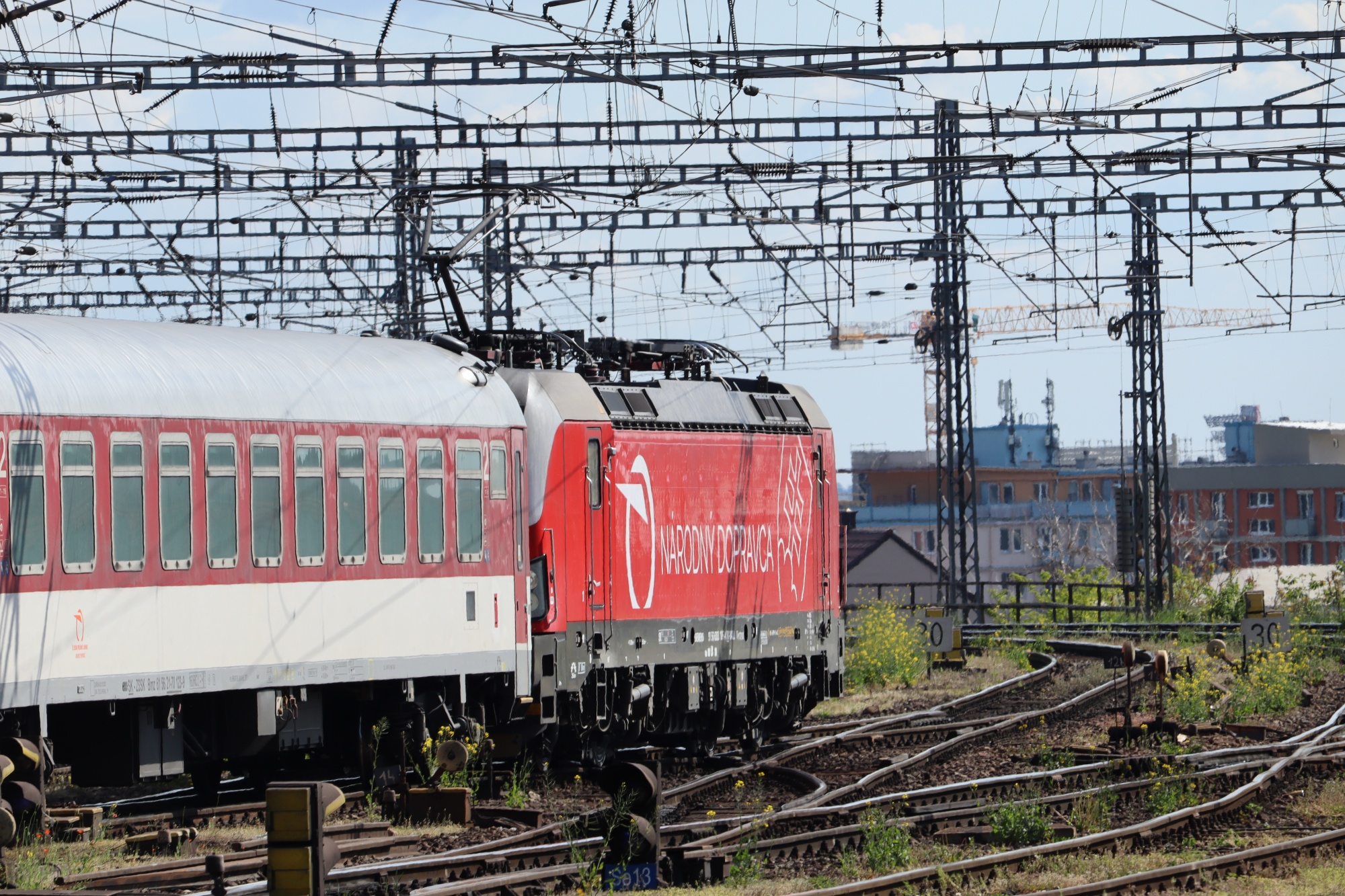
In areas where the level 3 warning is declared, ŽSR reduces the maximum train speed to 80 km/h. The restriction applies to sections where trains usually run at 120–160 km/h and is in effect during the hottest hours, from 10:00 to 21:00, writes zahori.sk citing the ŽSR press service.
Note: this rule is introduced for the entire summer of 2026 and activates automatically whenever SHMÚ issues a level 3 danger warning for specific districts. It was first applied at the end of June: then delays on the Bratislava — Košice main line and international EC trains on the Kúty – Štúrovo line reached 60 minutes, reports ta3.com with details of the situation.
The biggest impact is on fast and international trains on main corridors, but delays can also accumulate on local trains.
Why heat is dangerous for tracks
Steel expands from heat, and hot rails can deform. In the worst case, the track is literally “pushed” sideways. A critical rail surface temperature is about 50 °C, which is easily reached: at 28 °C air temperature, tracks heat up to 40 °C, and in extreme heat — up to 50–80 °C.
To fight overheating, ŽSR paints rails white on some sections to reflect sunlight. For example, the cog railway Štrba – Štrbské Pleso, used by tourists to climb the High Tatras, is painted this way.
Air conditioners also at risk
Heat tests not only the tracks but also the trains themselves. According to the carrier ZSSK, 100% of daytime long-distance cars and about 80% of regional cars are equipped with air conditioning, about 90% of the fleet in total. For comparison: in 2016, only half of the cars had air conditioning.
But even a working air conditioner runs at its limit in 40-degree heat, and failures happen more often. If the system fails:
Conductors first try to move passengers to another air-conditioned car.
If there are no seats and the car design allows, emergency windows are opened for ventilation.
After the trip, the car is sent for technical inspection and repair.
In modern air-conditioned cars, windows are not designed for normal opening because it disrupts the air conditioner’s operation for the whole car. In case of long delays, ZSSK additionally stocks bottled water on long-distance trains to distribute to passengers.
What to do if you plan to travel
ZSSK advises passengers during heat warnings to:
Check the current situation on the zssk.sk website or in the IDeme vlakom mobile app before leaving.
Allow extra time in your plan, especially if you have a transfer or an important meeting.
Carry enough water and a light snack.
Pay special attention to children, elderly people, and those with health problems.
The carrier emphasizes: passenger comfort is important, but safety is the top priority, so a slower train in the heat is not a whim but a necessity.