
There is something special about old photographs. They don't just show what architecture or fashion was like — they stop time. Looking at them, we seem to peek into the lives of people who are long gone, into cities that have changed beyond recognition. And this is especially interesting when it comes to cities that are familiar to us, but not yet fully discovered.
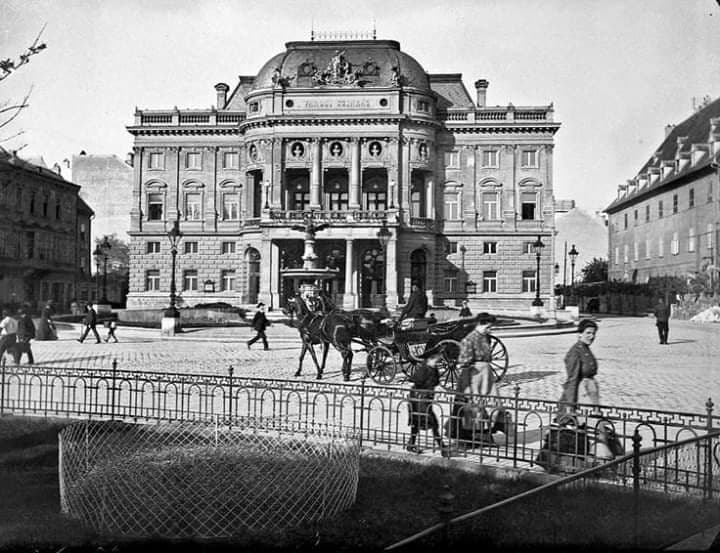
 Bratislava Castle is one of Slovakia's most famous symbols. In the 18th century, the castle was the residence of Hungarian kings, but after a fire in 1811, it turned into ruins. It stood like that for over 140 years — almost a century and a half — until a large-scale reconstruction began in the 1950s.
The restoration took a long time, with interruptions, and it was only in the 1960s that the castle actually began to look like a castle again. And in the 21st century, it was renovated once more — now it is not only a monument but also a full-fledged museum and a venue for state events.
These pictures take us back to a time when the streets were quieter, transport was slower, and life was more relaxed.
Bratislava Castle is one of Slovakia's most famous symbols. In the 18th century, the castle was the residence of Hungarian kings, but after a fire in 1811, it turned into ruins. It stood like that for over 140 years — almost a century and a half — until a large-scale reconstruction began in the 1950s.
The restoration took a long time, with interruptions, and it was only in the 1960s that the castle actually began to look like a castle again. And in the 21st century, it was renovated once more — now it is not only a monument but also a full-fledged museum and a venue for state events.
These pictures take us back to a time when the streets were quieter, transport was slower, and life was more relaxed.


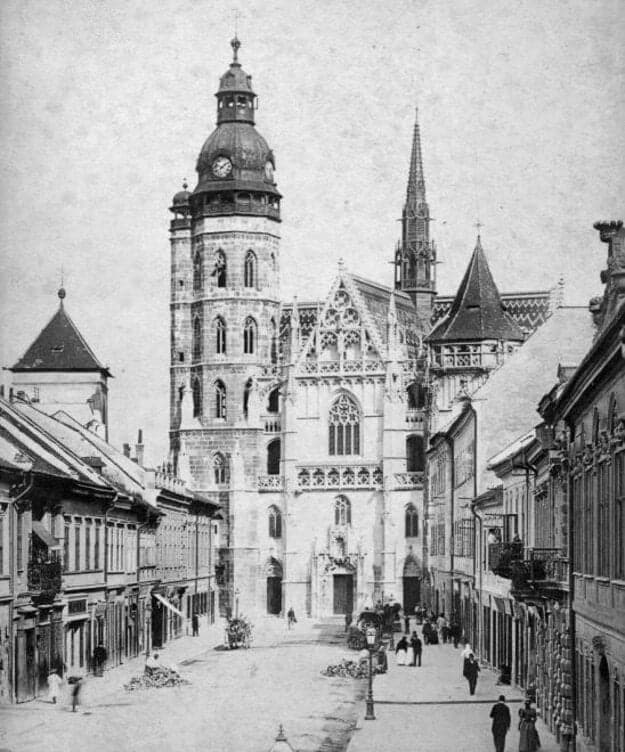 St. Elisabeth Cathedral was already the city's dominant feature back then, but around it, instead of cafes and shops, there were old benches, empty sidewalks, and a quietness that is hard to find there now.


 In a photo from 1954, you can see the Obchodný dom Hornád, one of the landmark department stores of its time. It was a modern shopping center and a popular place for city residents. In those years, such buildings served not only as shops but also as important social spaces — meeting places, places for communication, and even cultural events. This department store vividly reflects the atmosphere of post-war recovery, when cities began to return to normal life, and streets came alive after difficult times.


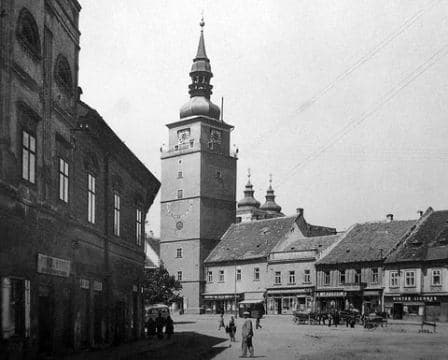 Trinity Square is one of the most beloved places in the center of Trnava. It is a small but very atmospheric square, surrounded by old buildings with history. The square got its name thanks to the Trinitarian Monastery located nearby.
Old photos show a calm, almost intimate atmosphere here — narrow streets, cobblestone roads, cozy building facades that have survived to this day. This place has always been popular with locals and tourists, as it combines history with the comfort of modern life.
Trinity Square is one of the most beloved places in the center of Trnava. It is a small but very atmospheric square, surrounded by old buildings with history. The square got its name thanks to the Trinitarian Monastery located nearby.
Old photos show a calm, almost intimate atmosphere here — narrow streets, cobblestone roads, cozy building facades that have survived to this day. This place has always been popular with locals and tourists, as it combines history with the comfort of modern life.
 The building of the Obchodná akadémia — a trade academy that trained young people for work in the economy and trade — is particularly noticeable in the picture. Its restrained facade and clean lines fit well into the overall appearance of the city, and inside, the educational process continued, preparing students for new challenges of the time.


 Šrobarov sad is a place that has always been an important part of the urban space. This old photo shows that there were not many trees here yet — only simple paths and open spaces that were gradually being developed for citizens' recreation.
Over time, Šrobarov sad became a real park with trees and flowerbeds, a place where you can enjoy peace and nature today, but in this photo, we see its early years — still without a green fence, just with simple paths and open space.
Šrobarov sad is a place that has always been an important part of the urban space. This old photo shows that there were not many trees here yet — only simple paths and open spaces that were gradually being developed for citizens' recreation.
Over time, Šrobarov sad became a real park with trees and flowerbeds, a place where you can enjoy peace and nature today, but in this photo, we see its early years — still without a green fence, just with simple paths and open space.

 Old photos are not just pictures from the past. They are a reminder that all cities have their own history, even if it is not always obvious at first glance. Sometimes it is worth stopping, looking back — and seeing how much has changed. And even more — has remained.
Bratislava
The capital of Slovakia long before it looked like other European capitals. In old photos, you can see trams with open platforms, apartment buildings with peeling facades, narrow streets without crowds. The castle, just like today, towers over the Danube.
Bratislava Castle is one of Slovakia's most famous symbols. In the 18th century, the castle was the residence of Hungarian kings, but after a fire in 1811, it turned into ruins. It stood like that for over 140 years — almost a century and a half — until a large-scale reconstruction began in the 1950s.
The restoration took a long time, with interruptions, and it was only in the 1960s that the castle actually began to look like a castle again. And in the 21st century, it was renovated once more — now it is not only a monument but also a full-fledged museum and a venue for state events.
These pictures take us back to a time when the streets were quieter, transport was slower, and life was more relaxed.
Košice
Once an important industrial and cultural city of Hungary, today it is the second largest in Slovakia.
St. Elisabeth Cathedral was already the city's dominant feature back then, but around it, instead of cafes and shops, there were old benches, empty sidewalks, and a quietness that is hard to find there now.
In a photo from 1954, you can see the Obchodný dom Hornád, one of the landmark department stores of its time. It was a modern shopping center and a popular place for city residents. In those years, such buildings served not only as shops but also as important social spaces — meeting places, places for communication, and even cultural events. This department store vividly reflects the atmosphere of post-war recovery, when cities began to return to normal life, and streets came alive after difficult times.
Trnava
A city sometimes called the "Slovak Rome" because of its large number of churches. In the past, it was a religious center, and this is clearly visible in the photos: churches, spires, monasteries. But what is most striking is the atmosphere — old streets, buildings with traces of time, people in simple clothes who seem to be in no hurry.
Trinity Square is one of the most beloved places in the center of Trnava. It is a small but very atmospheric square, surrounded by old buildings with history. The square got its name thanks to the Trinitarian Monastery located nearby.
Old photos show a calm, almost intimate atmosphere here — narrow streets, cobblestone roads, cozy building facades that have survived to this day. This place has always been popular with locals and tourists, as it combines history with the comfort of modern life.
Trenčín
These photographs show the city's beautifully preserved architecture — and, of course, the legendary Trenčín Castle, which still majestically towers over the city. The castle stands in its place, reminding us of the city's medieval history, while the streets below remain familiar and cozy. At the same time, the atmosphere of the Soviet era is noticeable in the photos — people are dressed in typical 1950s clothing, and the cars and details of everyday life also reflect daily life in the socialist country. This is a great example of how historical heritage and the modernity of that time coexisted.
The building of the Obchodná akadémia — a trade academy that trained young people for work in the economy and trade — is particularly noticeable in the picture. Its restrained facade and clean lines fit well into the overall appearance of the city, and inside, the educational process continued, preparing students for new challenges of the time.
Žilina
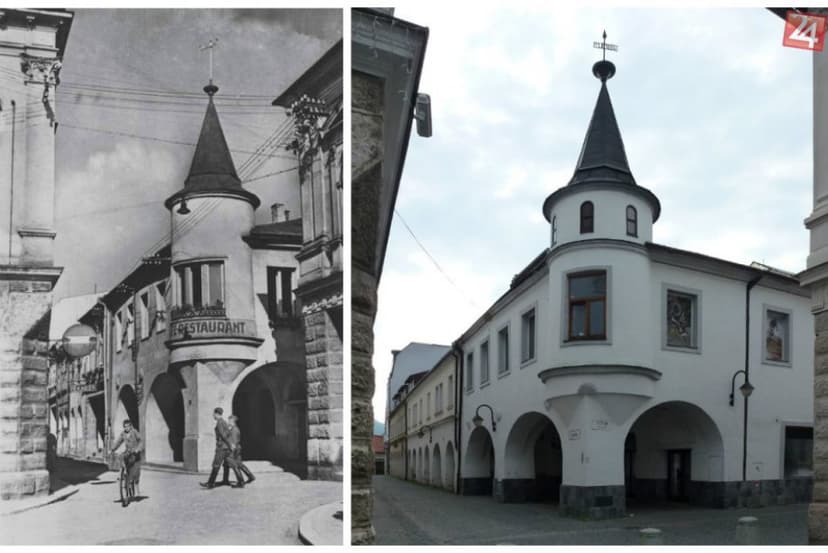
This city has a rich history and an interesting architectural heritage. Here you can see a mix of different styles — from medieval buildings in the center to examples of 20th-century modernism and functionalism. The old town with its narrow streets and townhouses, preserved almost unchanged, is particularly impressive.
Šrobarov sad is a place that has always been an important part of the urban space. This old photo shows that there were not many trees here yet — only simple paths and open spaces that were gradually being developed for citizens' recreation.
Over time, Šrobarov sad became a real park with trees and flowerbeds, a place where you can enjoy peace and nature today, but in this photo, we see its early years — still without a green fence, just with simple paths and open space.
Old photos are not just pictures from the past. They are a reminder that all cities have their own history, even if it is not always obvious at first glance. Sometimes it is worth stopping, looking back — and seeing how much has changed. And even more — has remained.