
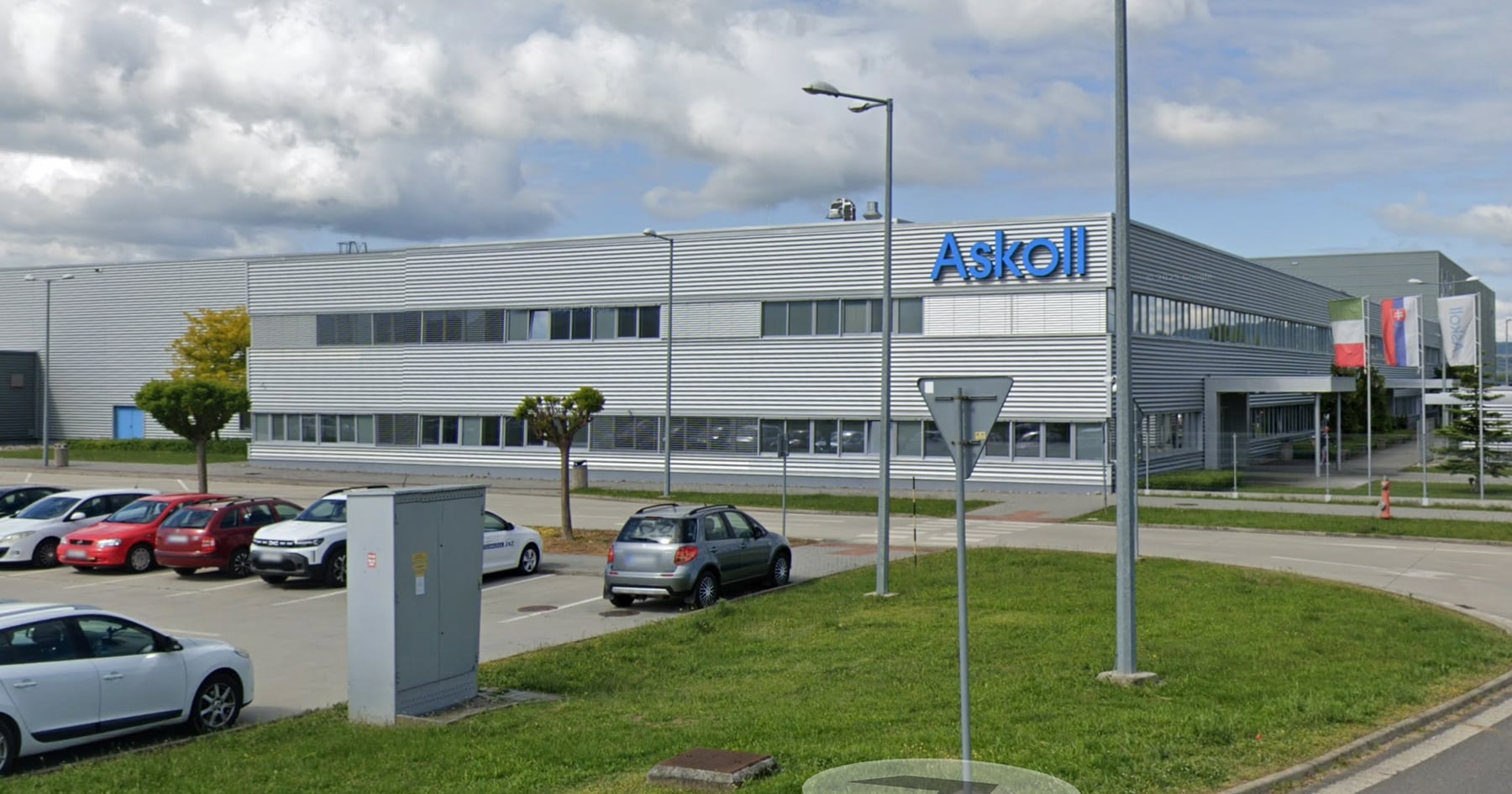
In the village of Potvorice, near Nové Mesto nad Váhom, the factory of the Italian group Askoll, which produces electric motors for washing machines from Whirlpool, Bosch, and Gorenje, will stop operating after 33 years of work. Production will close on December 31, 2026. All 77 employees will lose their jobs — on average, each of them worked at the company for over 17 years.
The company is not hiding behind "optimization" phrases: management directly named the consolidation measures of Fico's government as the reason for the closure. And this is already the second high-profile exit of a manufacturer from Slovakia in recent months.
Why Askoll is leaving and where production is moving
Adela Műllerová, the financial and HR manager of Askoll Slovakia, explained the parent company's decision by the high tax burden. Among the specific reasons, she named three government steps:
- introduction of a transaction tax;
- an increase in the corporate income tax by 3 percentage points;
- an increase in health insurance contributions for employees by 1 percentage point.
Let's recall the context: from January 1, 2026, health insurance contributions for employed workers in Slovakia increased from 4% to 5%, and progressive taxation for high incomes was also expanded. These changes affect everyone working here under an employment contract, including Ukrainians.
Askoll will move part of the production to a sister factory in Romania and part to China. The Askoll group, with headquarters in Vicenza, includes 11 companies with over 2800 employees, and its factories also operate in Italy, Brazil, and Mexico.
What the region is losing
The factory in Potvorice was built on an area of over 15,000 m², and at its peak, it employed about 400 people. In July 2016, the 80 millionth electric motor was produced here. Now, only an empty building and 77 people who will have to look for new jobs in a small village will remain from this story.
Askoll is not alone: the legendary Figaro is leaving Trnava
An even more painful loss awaits Trnava. The Figaro chocolate factory, which has been an integral part of the city for over 120 years, is ceasing production. Its owner, I.D.C. Holding, has been gradually moving equipment to the sister factory Candy Plus in the Czech town of Rohatec since the beginning of June — just a few kilometers from the Slovak border. The entire process, including the relocation of administrative and logistics functions, will take about 18 months and is expected to be completed by the end of 2026.
And this is not a story about a loss-making business. The Figaro brand belongs to the Irish group Valeo Foods (owned by the investment fund Bain Capital), which acquired I.D.C. Holding in 2024. The holding's figures for last year were: turnover of about 165 million euros and a profit of over 17 million euros. The company explains the move by a transformation towards more modern technologies and promises to offer employees positions at its other factories, but it is not yet known how many people will be left without jobs. For Trnava, this is the end of an industrial era: the characteristic smell of chocolate over the city will remain only a memory.
Industry sounds the alarm
The Association of the Automotive and Electrical Engineering Industry of Slovakia stated that due to government measures, its members have lost orders worth over 500 million euros in the last three years — an amount that could have provided jobs for over 1500 people.
Added to this is the global background: Volkswagen is not ruling out job cuts of up to 100,000, Microsoft plans to lay off about 4,800 employees, O2 Telefónica Germany is discussing cutting over 1,000 positions, and Disney continues its restructuring, which will affect hundreds of people in its ESPN, Pixar, and National Geographic divisions. For Slovakia, where the economy relies on industry and the automotive sector, such sentiments from large corporations are a bad sign.
What this means for you
If you work in manufacturing in Slovakia, it's worth keeping an eye on the news: reports of factory closures have become more frequent lately. Employees who are laid off are entitled to severance pay (the amount depends on their length of service), and the first step after dismissal is to register with the úrad práce (labor office), which entitles you to unemployment benefits and access to retraining courses.
Read more about the history of the factory in Potvorice and the government's reaction in the original article.