
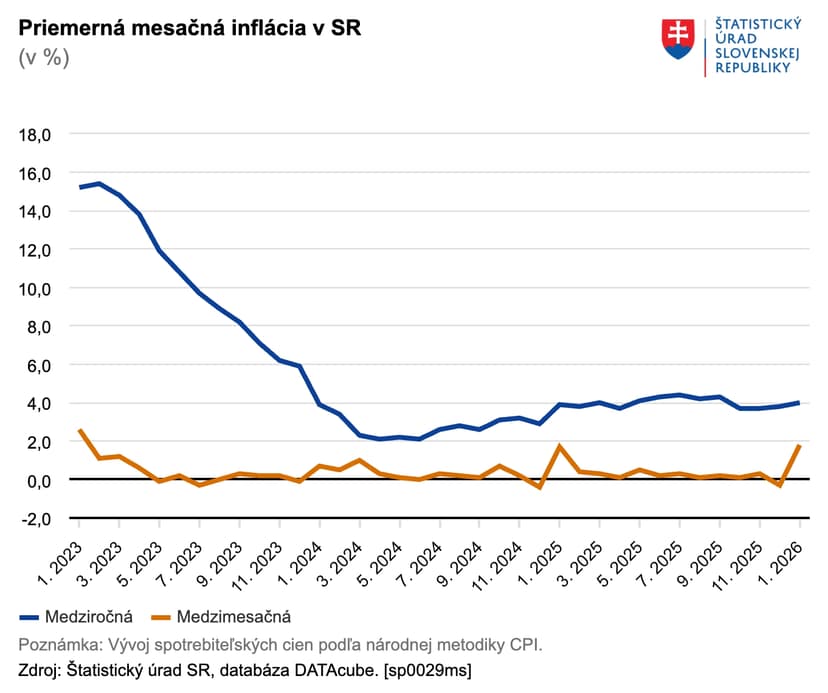
While in most European Union countries the pace of price growth is slowing down, Slovakia shows the opposite trend. According to Eurostat data, in January, annual inflation in the country accelerated to 4.3%, which is one of the highest rates in the EU after Romania. For comparison, the average rate in the eurozone fell to 1.7%. The main drivers of growth were costs for housing, energy, and, above all, food products, whose prices on average jumped by 2.4% in just one month.
Finance Minister Ladislav Kamenický calls the situation difficult, explaining it by global trade wars and the unsatisfactory state of public finances, which forces the government to take consolidation measures. However, for the average consumer, this means a real decrease in income: the January price increase was the highest in the last three years. The biggest price increases affected fruits, vegetables, and meat products, forcing households to review their daily expenses.
What Became More Expensive: Price Analysis
The strongest price shock hit the group of fresh produce and meat. In particular, prices for vegetables and fruits increased on average by 7–9%. Among meat products, chicken (a whole chicken became 23 cents more expensive per kilogram) and beef were the worst performers.
Meat and Products: Čabajka sausage (+1.5 euros), fish fillet (+3 euros), chicken breast, and beef.
Vegetables and Fruits: Paprika (+62 cents), grapes (+30 cents), bananas, tomatoes, and garlic.
Groceries and Drinks: Rice (+15 cents), honey (+33 cents), grain coffee, and sweet carbonated drinks.
Dairy Products: Sheep cheese (+3 euros), whipping cream, and full-fat cheese.
However, there are also isolated positive changes in the market. Baked goods became slightly cheaper, especially regular bread (by 3 cents) and whole-grain products. Price reductions were also recorded for eggs, butter (minus 22 cents), and olive oil. Pork neck (krkovička) and some types of frozen fish significantly decreased in price. Despite these local reductions, the overall shopping basket remains significantly more expensive than at the end of last year, confirming the difficult economic period for Slovak families.