

A journalist from Hospodárske noviny, who lived his whole life in Trnava and also lived in Bratislava, went to Košice with clear stereotypes about the "neglected east." He returned with a surprising conclusion: the center of Slovakia's second-largest city is more vibrant than the capital. At the same time, his publication about Košice as a "state within a state" honestly shows the other side: move away from the center, and the situation changes very quickly.
For Ukrainians choosing where to settle in Slovakia, this is a very practical question. Let's look at the east of the country using numbers.
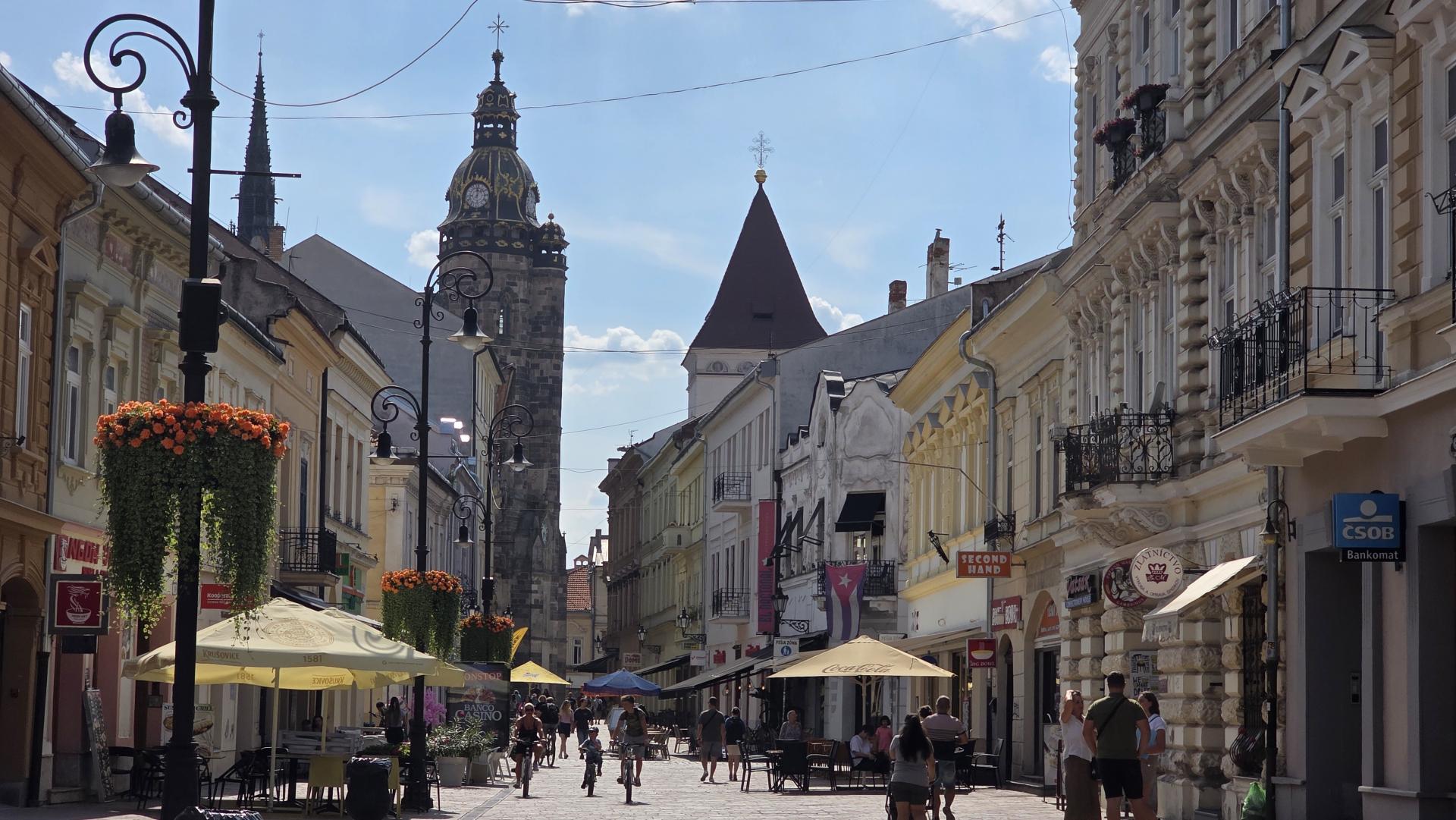
Two Faces of One City
The center of Košice, with Hlavná ulica (Main Street), cafes, restaurants, and cultural life, is truly impressive. The city experienced the status of European Capital of Culture, has universities, an airport, and its own "big city" atmosphere that no other Slovak city has, except Bratislava.
But this is literally a few blocks. Outside the center begins the east that is usually talked about when mentioning the gap between the west and east of the country. And this gap is not a feeling, but statistics.
How Much They Earn and How Much They Are Unemployed
The difference between Bratislava and Košice is best seen in salaries. The average salary in the Bratislava region is €1,836, and in the Košice region, it is €1,438. A gap of almost €400 per month. According to salary data for Slovakia's regions, this is one of the most noticeable regional imbalances in the country.
Unemployment is even more contrasting:
- Bratislava region — 2.4–3.3% unemployment, practically full employment.
- Košice region — 8–9.7%, which is three to four times higher.
At the same time, the Košice and Prešov regions have the largest number of registered job seekers in Slovakia, over 30,000 in each. For a person looking for a job, this means competition. For an investor, it means a huge labor reserve. This is exactly what the big players entering the east are counting on.
Volvo is Building a €1.2 Billion Plant
The main investment story in the east is the Volvo plant in the Valaliky industrial park near Košice. This is the concern's first new car plant in Europe in decades, focused exclusively on electric vehicles.
Key figures:
- The total investment is €1.2 billion, of which €267 million is state aid, officially approved by the European Commission.
- Construction started in 2023, and mass production is planned for 2026. This means the plant is practically in the final stage now.
- At least 3,300 direct jobs, not counting contractors and service companies around.
- Initial capacity will reach 250,000 electric cars per year.
And Volvo is not the only one here. CTPark Košice near the airport is expanding: in addition to the existing 120,000 m², they plan to add another 180,000 m² of industrial and logistics space, reports Priemysel Dnes. Automotive suppliers, logistics, and warehouses are entering the industrial parks around Košice.
What This Means for You
If you live in eastern Slovakia or are choosing where to move, it's worth looking at the numbers realistically.
Today, the Košice region loses to Bratislava in terms of salaries and unemployment. This is a fact, and it is often easier for a highly qualified specialist in the west. But the trend is different: the east is currently receiving the largest industrial investments, and the opening of the Volvo plant in 2026 means thousands of vacancies, from production operators to engineers, logisticians, and administrative staff with English skills.
Plus, practical details that often make a difference: housing in Košice is noticeably cheaper than in Bratislava, competition for rent is lower, and it's closer to the mountains and Hungary. For those willing to work in production or related fields, the east may prove to be a more profitable choice in the next two to three years than the overcrowded labor market of the capital.
The center of Košice has long ceased to be "the provinces." The only question is whether the rest of the region will keep up with its own center. And this is exactly what billion-euro investments are working towards now.