
The find, made by specialists from the Archaeological Institute of the Slovak Academy of Sciences (SAV), is the first such site discovered in the Nitra region. The camp, covering 7.4 hectares, offers a unique chance to explore almost its entire area, which is rare in European archaeology.
Traces of a Fierce Battle
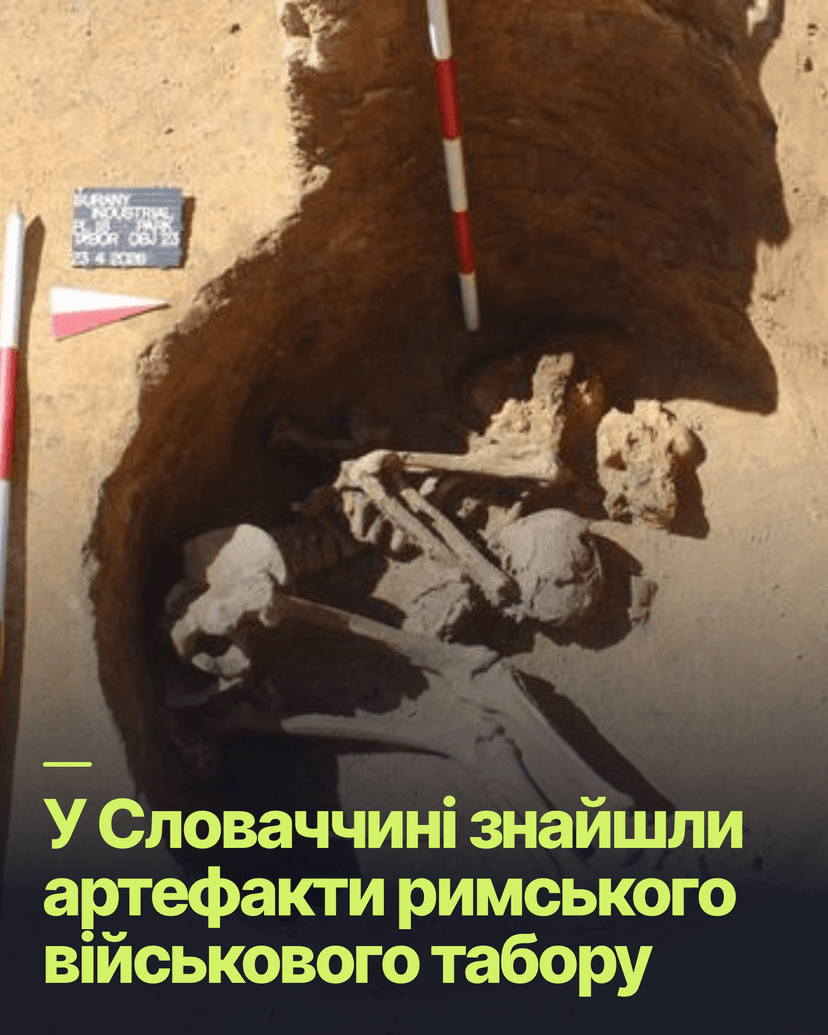
The most striking part of the discovery was evidence of a fierce battle between Roman legionaries and local Germanic tribes. Archaeologists found the remains of 18 Roman soldiers, as well as numerous body fragments scattered throughout the camp – in wells, defensive ditches, and hastily dug graves.
The bones show clear signs of violent death: broken skulls, slash wounds, and fractures. This suggests a sudden attack and possibly the complete destruction of the garrison, which could have numbered 500-600 warriors. Among the finds are fragments of weapons, helmets, typical Roman hobnailed footwear, and even rare scale armor buried next to a horse.
It remains a mystery to scientists why the Romans, known for their respect for burial rituals, did not return to retrieve the bodies of their fallen soldiers and valuable equipment. This could indicate a catastrophic defeat in the area.
An Unusual Roman Fortress
According to researchers, the camp in Šurany contradicts many rules of Roman military construction. It has an irregular shape, is not located on a hill or near a water source, and its defensive ditches are non-standard.
One unique feature is a fortified entrance of the *clavicula* type (collarbone) – a curved rampart that protected the gate. This is the first such entrance found in Slovakia. Such details allow scientists to better understand how the Romans adapted their tactics to the conditions in the "barbarian" territories north of the Danube.
Why This Discovery is Important
Matej Ruttkay, head of the Archaeological Institute of SAV, emphasized that this discovery fills a "white spot" in the history of Roman presence in the region. The opportunity to explore almost the entire camp will allow scientists to answer questions about its function, duration of use, and the details of the conflict with the Germans.
The research results will be important not only for the history of Slovakia but also for understanding one of the most significant periods of the Roman Empire. As reported by Slovak media, the analysis of the findings will take years, promising to be a true historical detective story. Further excavations will help determine which specific legion was based here and what its tragic fate was.