




What is an s.r.o. in Slovakia
An *s.r.o.* (spoločnosť s ručením obmedzeným) is one of the most common forms of doing business in Slovakia, especially for small and medium-sized enterprises. This company form is suitable for various purposes, including commercial activities. The company is responsible for its obligations with all its assets, and the founders (co-owners) are liable only within the limits of unpaid contributions registered in the Commercial Register (*obchodný register*). An *s.r.o.* can be founded by one person or a group of up to 50 people. The minimum capital is €5,000, and the minimum contribution of each founder is €750.Which business form to choose in Slovakia — Živnosť or s.r.o.?
The choice between a *živnosť* (sole-trader licence) and a limited liability company (*s.r.o.*) is one of the key decisions when starting your own business, as these forms differ significantly in the level of liability, financial burden, and taxation method. A sole trader (*živnosť*) is a natural person and is liable for possible debts with all their personal assets — home, car, and savings. In contrast, an *s.r.o.* is a separate legal entity, and the owner's risk is limited only to the company's assets and the registered share capital of at least €5,000. At the same time, the system of mandatory payments differs significantly: a *živnosť* owner pays minimum social security contributions ranging from €131.34 to €303.11 per month and health insurance contributions of €121.92 per month. Meanwhile, an *s.r.o.* as a legal entity does not directly pay these contributions (unless the owner receives a salary). The taxation system also differs. For a *živnosť*, personal income tax applies, which in 2026 will be 15% if the taxable income does not exceed €100,000. If this amount is exceeded, a progressive scale from 19% to 35% applies, depending on the income level. For an *s.r.o.*, a profit tax rate of 10% is set for income up to €100,000, 21% for income from €100,000 to €5 million, and 24% for income over €5 million. In addition, an *s.r.o.* has a so-called minimum corporate tax rate (minimum tax) ranging from €340 to €11,520 per year, while a *živnosť* has no minimum tax. Accounting for a *živnosť* is much simpler; simplified accounting of actual expenses can be maintained. In contrast, an *s.r.o.* is obliged to keep full double-entry bookkeeping. This is why *živnosť* is most often chosen by small business owners and service providers with an annual income of up to approximately €30,000. An *s.r.o.* becomes more advantageous with higher turnover, a desire to scale the business, work with large and foreign companies, and maximize the protection of personal assets. In a simplified sense, a *živnosť* means a quick start, minimal bureaucracy, and ease of operation. An *s.r.o.* offers greater legal security, a better image, and more profitable development opportunities with high income. Therefore, the final decision should be based on real financial goals, the scale of the future business, and the acceptable level of risk.Conditions for establishing an s.r.o.
Founders (co-owners) can be any individuals, but they must not be registered in the enforcement proceedings register (*zapísaný v registri exekúcií*) and must not have debts to the tax office or Social Security. The executive director (*konateľ*) must meet the following requirements: * Age over 18 years. * Full legal capacity. * Citizenship of Slovakia, the EU, or a temporary residence permit for the purpose of entrepreneurship in Slovakia. * No entries in the enforcement proceedings register (*Centrálny register exekúcií*). * Clean criminal record. Foreigners who wish to conduct business through an *s.r.o.* must have a temporary residence permit for the purpose of entrepreneurship. Only a person who is or will become the executive director (*konateľ*) of the company can apply for such a permit. Simply being a co-owner is not enough. To obtain a residence permit for entrepreneurship, you need to provide a business plan with an estimate of business start-up costs, or a trade license along with the articles of association or founding agreement.How to open an s.r.o. in Slovakia — step-by-step guide
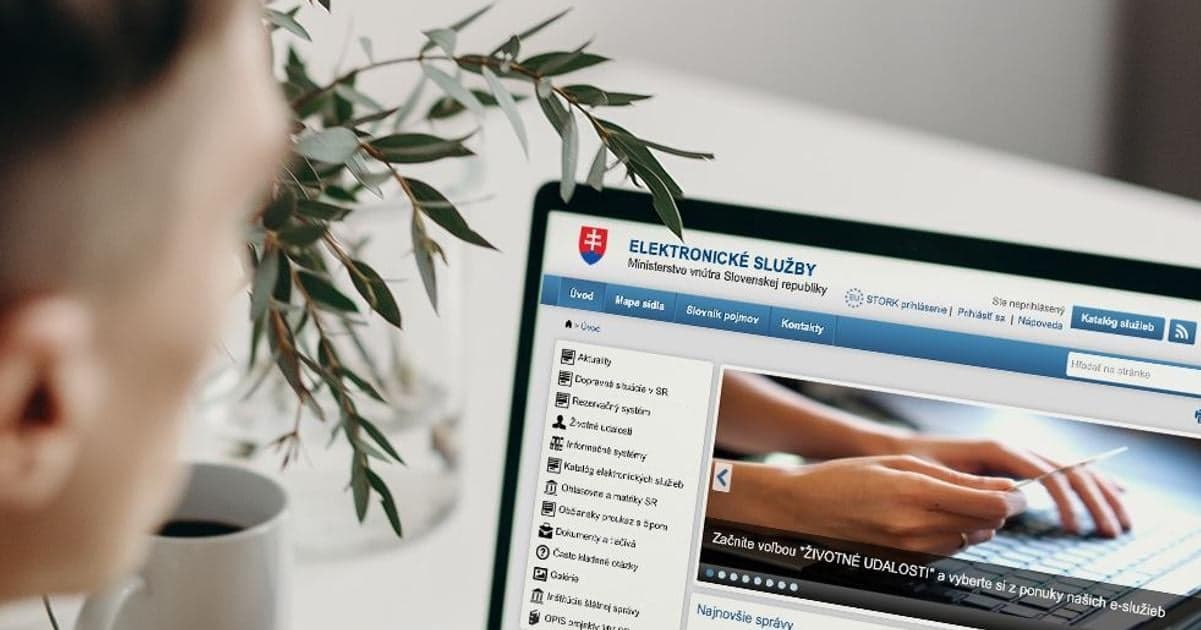
1. Choose a company name: The name must be unique, easy to remember, and not confused with existing ones. Check availability in the Commercial Register. 2. Determine the scope of activity: The next important step is to choose the subject of entrepreneurship, i.e., in which field or fields the *s.r.o.* will operate. You need to obtain a *živnostenské oprávnenie* (trade license) for these activities. (It will be issued by the relevant *živnostenský úrad* (trade licensing office) at your company's registered address). You can choose from three types of *živností*: * *voľné* (free), which do not require special qualifications, * *viazané* (tied), which require professional qualifications, * or *remeselné* (craft), which require qualifications and also specialized training. There is also a list of recommended designations for *voľných živností*, which can be downloaded from the website of the Ministry of Interior of the Slovak Republic. 3. Determine the company address: The address must be real (a house, apartment, or non-residential premises). If it's not your own property, you need the owner's consent with a notarized signature. 4. The next mandatory step is to define the various responsible persons in the s.r.o.**: * *spoločníkov* (partners/shareholders), who have a share in the company through a monetary or non-monetary contribution, * *konateľov* (executives/directors), who are the statutory bodies of the *s.r.o.* and can manage it and act on its behalf, * *správcu vkladu* (deposit administrator), who is one of the company's *spoločníkov* and is responsible for managing the participants' contributions. The share capital of the *s.r.o.* (contributions of all *spoločníkov* combined) must be at least €5,000. If there are several *spoločníkov*, each must contribute a minimum of €750. In the case of a single *spoločník*, the share capital must be paid in full. If there are several *spoločníkov*, each must pay at least 30% of their contribution. The sum of all paid contributions from all *spoločníkov* must be at least 50% of the legally established share capital. In Slovakia, the law requires a minimum share capital of €5,000, with each *spoločník* contributing at least €750. In practice, this does not necessarily mean having the money physically or in an account — the contribution can also be non-monetary (e.g., a car or other property). 5. Prepare company documents: When establishing a company, you need to prepare and submit several different documents (A full list of documents to be submitted with the application for registration in the Commercial Register can be found in the Decree of the Ministry of Justice of the Slovak Republic No. 25/2004 Coll.). These include: * Founding document or articles of association (*zakladateľská listina* or *spoločenská zmluva*), * Declaration of the deposit administrator (*vyhlásenie správcu vkladu*), confirming in writing that the share capital has been paid, * Signature specimen of the executive director (*konateľa*), which must be notarized, * Declaration of the sole shareholder, if the *s.r.o.* is founded by only one person, stating that they are not the sole founder or sole shareholder in more than two companies, * Consent of the property owner with a notarized signature, * Power of attorney for the person handling the registration in the commercial register, if it is not done by the entrepreneur themselves. * Notarized declaration for a foreign person: this is a document in which you officially confirm that you are a foreigner (not a Slovak citizen), stating your personal data, citizenship, and address of residence abroad. Important: * Such a declaration is *not always required*, as your status as a foreigner is confirmed by your passport or residence permit. * It is only needed if a specific institution (e.g., a bank or commercial register) requires it for a specific procedure, such as company formation. * The document is prepared in Slovak (can be bilingual), and the signature is certified by a notary in Slovakia or at a Slovak consulate abroad. * The declaration includes: personal data, confirmation of foreign status, awareness of responsibility for false information, date, place, and signature. 6. Submit the application for company registration: The application for company registration in the commercial register can be submitted: * *electronically* through the electronic services of the Commercial Register; * *via a single point of contact* (*Jednotné kontaktné miesto*). If you submit the application through a contact point, you can simultaneously submit a request for company registration with the tax office.You need to add all prepared documents to the application and pay a court fee of 220 euros when founding an s. r. o. (limited liability company). The company registration in the commercial register takes two working days from the moment the court receives the application. You can start business activities from the day the entry is made in the commercial register. If registered, the court will send the applicant confirmation of registration and an extract from the commercial register to their electronic mailbox. The disadvantage is that these rules and documents often change, so you need to pay close attention to provide everything necessary and avoid rejection of your application. If you use intermediaries, you will have to pay for them, but they will prepare all the necessary documents, which you will only need to sign, and the company will be founded within two weeks.
How long does it take and how much does it cost to found an s. r. o.?
Founding an s. r. o. takes at least 8–10 working days. Of these, 1–3 days are for obtaining the trade license certificate, and 5–6 days are for registration in the commercial register (registration can be faster if you use a notary). The process for the trade register can take another 2 days if craft or related trades are added.
It can also happen that the trade licensing office finds that not all legal requirements are met, and additional documents will be needed. A notification about the need for additions is sent by mail, which can extend the time to receive the certificate. Due to various delays, the entire process of founding an s. r. o. can practically take about 2–3 weeks, which you should expect. If you found the company yourself and submit documents to the trade licensing office electronically, founding it will cost about 220 euros. If you found an s. r. o. through an intermediary, the cost will be about 280-350 euros.
This price usually includes full service, often with a guarantee of company founding. Intermediaries also often provide free consultations or additional benefits after founding.
Taxes for s.r.o. in 2026: key aspects
1. Corporate Income Tax (Daň z príjmov právnických osôb – DPPO)
Tax rates: Progressive, depending on taxable income (revenue):
10% – for income up to €100,000.
21% – for income from €100,001 to €5,000,000.
24% – for income over €5,000,000.
Features: Tax is paid only on profit. The tax return is filed by March 31 of the following year (extension to June or September is possible).
2. Minimum Tax
Amount: From €340 to €11,520 per year, depending on revenue (výnosy). This tax is mandatory even with losses or zero profit,
Gradation:
Up to €100,000 revenue: about €340.
Higher levels: increases proportionally, up to €11,520 for large companies.
Payment deadline: Together with the tax return (by March 31). Companies founded in 2025 pay for the first time in 2027 (for 2026, the first year is exempt).
3. Social and Health Contributions (Odvody)
Mandatory for the company: An s.r.o. does not pay fixed minimum social (Sociálna poisťovňa) or health (Zdravotná poisťovňa) contributions as a legal entity.
Features for directors/co-owners: If the konateľ (executive director) or spoločník (co-owner) receives a salary (mzda) or remuneration (odmena), then personal contributions arise from this income:
Social: Minimum €303.11/month (from 26% of average salary, base – €914.40).
Health: 16% of the base (minimum €121.92/month, base – €762).
4. Other tax-related aspects
Accounting and expenses: Mandatory double-entry bookkeeping (podvojné účtovníctvo) with full documentation.
Dividends: If profit is distributed as dividends, there is a 7% tax for residents (or under double taxation treaties for non-residents). In practice, the most common mistakes when founding and running an s. r. o. are related not to the registration itself, but to non-compliance with formal requirements afterward.
Entrepreneurs often forget to file their tax returns on time, do not keep proper accounting records, or incorrectly draft contracts. This can lead to fines, business suspension, or problems during inspections.
To avoid problems with tax authorities, it is important to maintain complete and transparent podvojné účtovníctvo from day one, keep all invoices, contracts, and payment documents, and pay taxes and submit reports on time. It is recommended to immediately decide how the konateľ's remuneration will be paid – as a salary or dividends – and reflect this correctly in the accounting and tax records.
Also, do not underestimate the role of specialists. An experienced accountant or tax advisor in Slovakia will not only help you avoid mistakes but also suggest legal ways to optimize costs. When choosing a specialist, pay attention to their experience working with foreign company owners, client reviews, and knowledge of the specifics of entrepreneurship in your field.
Do you need advice or help to open an s.r.o. (limited liability company) in Slovakia?
Leave your request and we can give you free advice and help with this matter!