
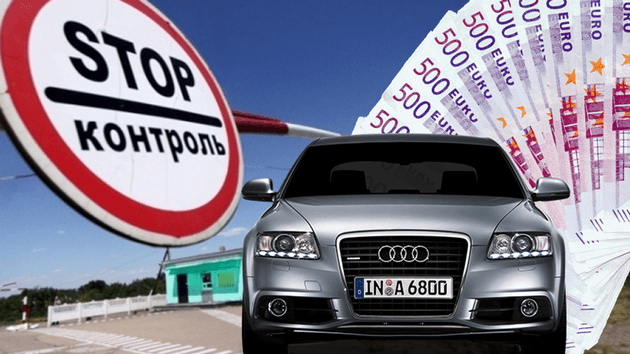





The customs clearance process might seem complicated, but it is quite understandable if you look into it. You just need to gather documents, go through a few steps, and consider the specifics of your situation. Especially good news for those with temporary asylum status – you can clear your car much faster and practically for free! In this article, we will explain in detail how to clear a car in Slovakia, what documents are needed, how much it costs, and how to avoid unnecessary problems.
Do you need advice or help with customs clearance of a car from Ukraine in Slovakia?
Leave your request and we can give you free advice and help with this matter!
Customs Clearance Conditions: Who Can Do It for Free?
In Slovakia, the conditions for car customs clearance depend on your legal status and the country where the car comes from. Free Customs Clearance (0% duty and VAT): If you have temporary asylum status, which is currently extended until March 4, 2026, and your car was registered in Ukraine, you can clear it without paying duty and VAT. This rule allows for significant savings on customs clearance. Standard Conditions for Others: If you do not have temporary asylum status or the car is imported from another country, standard customs payments apply:
Duty: 10% of the car's value (the estimated value is determined by the customs authority based on market prices).
VAT: 20% of the car's value.
Excise duty: Depends on the engine size and fuel type.
You can find more details about calculating payments on the official website of Financnasprava.sk
Step-by-Step Car Customs Clearance Process
Clearing a car in Slovakia involves several steps that must be followed in order. Here is a detailed plan for cars with Ukrainian plates or from other countries:
Step 1. Deregistration in the Country of Registration
Before bringing the car to Slovakia, it must be deregistered in the country where it is registered:
For Ukrainian plates: Contact the Service Center of the Ministry of Internal Affairs of Ukraine; if the car is from another country, deregister it there. You will need:
Car documents.
Passport and identification code.
Receipts for paid fees.
After deregistration, you will receive transit plates and documents confirming that the car is no longer registered in Ukraine.
Do you need advice or help with customs clearance of a car from Ukraine in Slovakia?
Leave your request and we can give you free advice and help with this matter!
Step 2. Customs Clearance in Slovakia
After arriving in Slovakia, contact the nearest customs office (Colný úrad). You need to submit a customs declaration and pay the required fees (if applicable). Documents for Customs Clearance:
Car's technical passport (registration certificate).
Sales contract or other document proving ownership.
Your passport and temporary asylum document (if you have one).
Important: All documents (technical passport, sales contract, etc.) must be officially translated into Slovak and notarized in Slovakia. We wrote more about finding a sworn translator in this article. Customs clearance usually takes 1–3 days if the documents are in order. If you have temporary asylum status, you will be exempt from duty and VAT, but you still need to submit a customs declaration. If you bought a new vehicle (less than 6,000 km mileage or first registered less than 6 months ago) in another EU country, pay 20% VAT in Slovakia at the tax office (Daňový úrad) within 7 days of purchase. If the car is used (over 6,000 km mileage and first registered over 6 months ago) from another EU country – you do not need to pay VAT in Slovakia ; it is paid in the country of purchase.
Step 3. Technical Inspection (TK, EK, KO)
After customs clearance, the car must be checked to ensure it meets Slovak standards. These checks are carried out at certified STK centers. To do this, undergo:
TK (Technická kontrola): Technical inspection, which checks the car's condition (brakes, suspension, lights, etc.).
EK (Emisná kontrola): Emissions test.
KO (Kontrola originality): VIN code check to ensure the car is not stolen and has not undergone structural changes.
On the website Stkonline.sk, you can quickly find a service center for technical inspection that suits you by location and type of service needed. The cost of checks depends on the region, but on average it is:
TK (technical inspection): €50–€70.
EK (emissions test): €30–€50.
KO (originality check): €40–€60.
If the car fails the inspection, you will be given time to fix the defects (e.g., replace tires or repair the exhaust system), after which you will need to undergo a re-inspection.
Step 4. Insurance
Before registering the car, you must obtain mandatory insurance that covers damages you might cause to other road users. The cost depends on the insurance company – on average €100–€200 per year.
Step 5. Car Registration
The final step is registering the car in Slovakia. Contact your local transport authority (Okresný úrad, odbor dopravy) and submit all necessary documents:
Technical passport from the customs office (proof of customs clearance).
Insurance contract.
Protocol of passing TK, EK, and KO.
Your passport and residence permit or temporary asylum document.
Receipt for the registration fee (from €33 to €100, depending on the car type and engine power).
After checking the documents, you will be issued Slovak license plates and a new technical passport (osvedčenie o evidencii). Registration usually takes 1–2 days.
Do you need advice or help with customs clearance of a car from Ukraine in Slovakia?
Leave your request and we can give you free advice and help with this matter!
How Much Does Customs Clearance Cost Approximately?
The total cost depends on your situation:
For those with temporary asylum: Without duty and VAT, the costs will be approximately €250–€480 (technical inspection, insurance, registration, possible notarized translations).
For others: Add duty (10%), VAT (20%), and possibly excise duty. For example, if the car costs €10,000:
Duty: 10% = €1000.
VAT: 20% of (€10,000 + €1000) = €2200.
Together with technical inspection, insurance, and registration: around €3000 (including additional costs like document translation).
For used cars from the EU: Duty and VAT are not paid in Slovakia if they have already been paid in the country of purchase, so the costs will be lower – €250–€500 (can increase to €650 if additional services like translation or intermediaries are needed).
This guide only reflects a general example of the car customs clearance process, as there can be various cases and individual situations. We recommend studying official sources and laws yourself, and consulting with specialists regarding your specific case.