
The grocery receipt in Slovak supermarkets finally became lighter: food prices in July were lower than a year ago. Overall inflation in the country slowed to 3.0% — the lowest level since summer 2024, according to a quick comment from the National Bank of Slovakia.
This is good news for wallets, but with a caveat: electricity and fuel prices are rising at the same time, so savings on vegetables can easily be “eaten up” by utility bills.

What exactly happened with prices
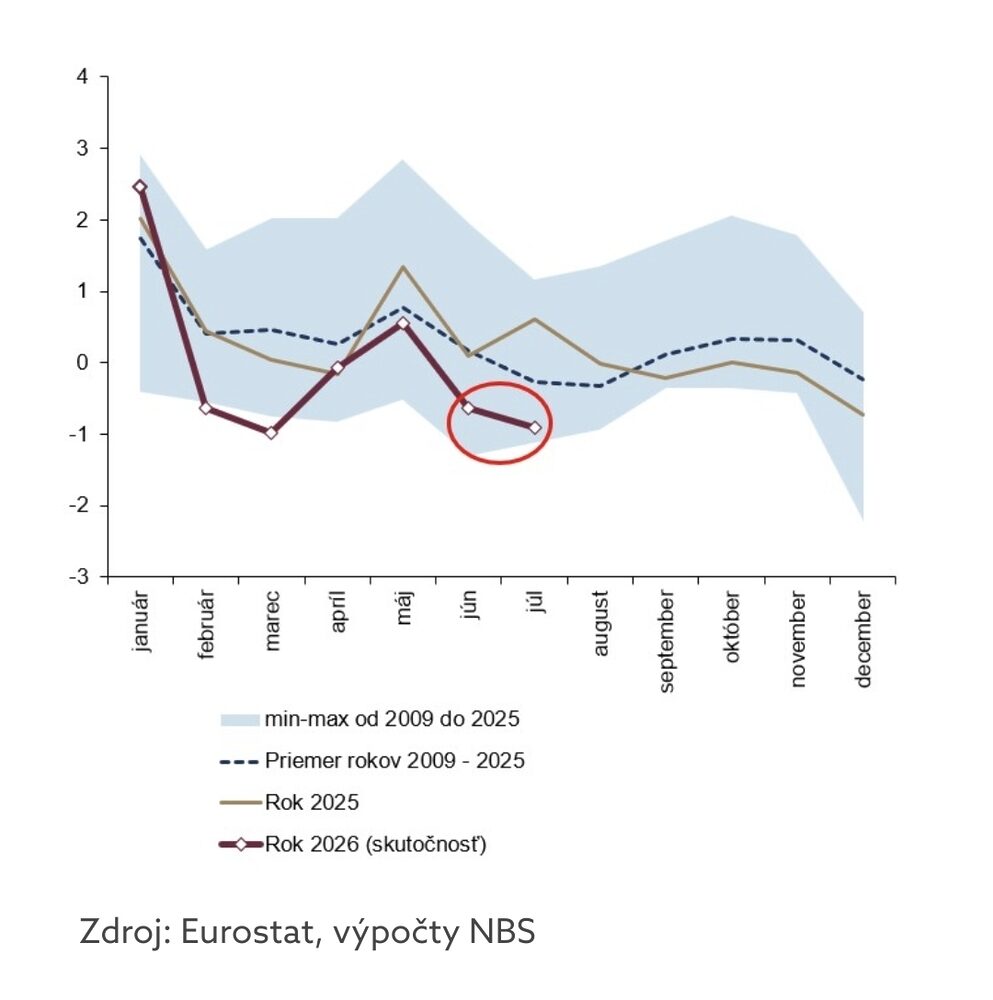
According to preliminary Eurostat data, consumer prices in July decreased by 0.1% compared to June. This is the second consecutive month of price decreases in Slovakia — a rare event that last happened at the end of 2018.
Annual inflation by the harmonized index of consumer prices (HICP — the single European method for calculation used to compare countries) fell from 3.5% in June to 3.0%. The figure was lower than the National Bank of Slovakia predicted in its summer forecast — mainly due to unexpectedly strong food price decreases.
What got cheaper and why
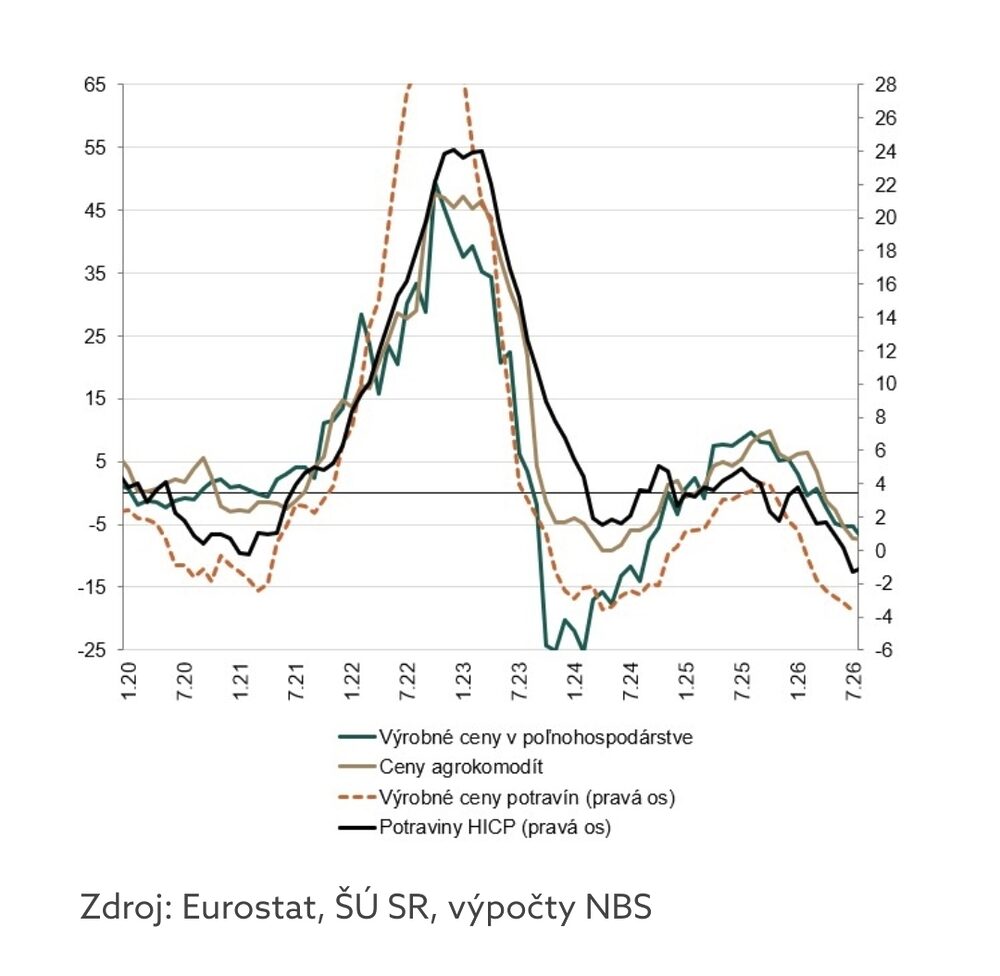
Food, including alcohol and tobacco, has been the biggest factor slowing inflation for the third month in a row. In July, food cost 1.3% less than a year ago. Data from electronic cash registers (eKasa) show where buyers are saving:
Fruits and vegetables. They are getting cheaper due to a good harvest and warm weather — the seasonal factor worked stronger this year than usual.
Dairy products, oil, and fats. Prices are pushed down by an oversupply in the market.
Food products overall. The trend is also supported by lower producer prices for food.

What is getting more expensive
Not everything is so rosy. Energy prices increased by 11.4% year-on-year — this is the biggest risk for household budgets in the coming months. Tensions in the Middle East and rising oil prices have not yet fully reached Slovak gas stations, but fuel prices sharply rose at the end of July, which will be reflected in August statistics.
Services increased by 4.4% over the year, although weaker household demand is gradually slowing their price growth. Core inflation — that is, price growth excluding food and energy — was 3.5% in July and, according to the NBS forecast, will stay around this level until the end of the year.
How Slovakia looks compared to the eurozone
Slovakia’s 3.0% is slightly above the eurozone average, where July inflation was 2.9% after a 0.1 percentage point increase, reports Aktuality.sk. The entire currency bloc is moving away from the ECB’s 2% target mainly due to more expensive energy. The worst situation is in Lithuania (5.6%) and Bulgaria (4.1%), so Slovakia is somewhere in the middle.
What this means in practice
Now is a good time to buy seasonal vegetables and fruits — they are cheaper than last year, and such an opportunity is rare. But the National Bank already warns: inflation will likely accelerate to 3.2% in August because the seasonal price decrease effect will end, and more expensive imported goods and fuel will start pushing prices up. The forecast for the whole of 2026 is 3.6–3.7% on average.
What follows from this: you can save a little on food now, but the budget should include higher expenses for fuel and energy — these will be the main price drivers until the end of the year. Our currency converter will help you navigate prices and recalculate expenses.